
Introduction
With electricity prices steadily increasing and environmental issues on the rise, homeowners and businesses a like are transforming their rooftops into smart, sustainable solar solutions. The best part about rooftop solar systems is that they allow you to generate your own electricity from free sunlight while reducing dependence on traditional power sources and lowering monthly energy bills. But what is rooftop solar, and how does it work? Let’s break it down into something simple and practical.
What Is Rooftop Solar?
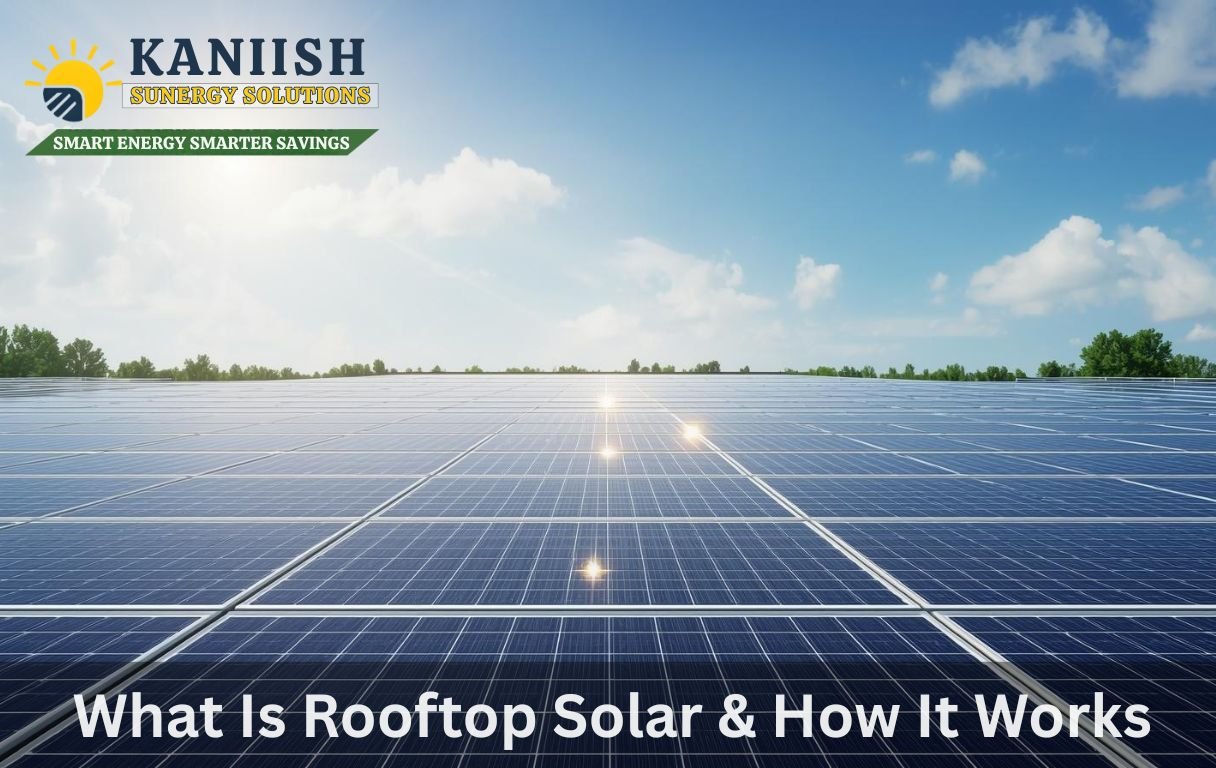
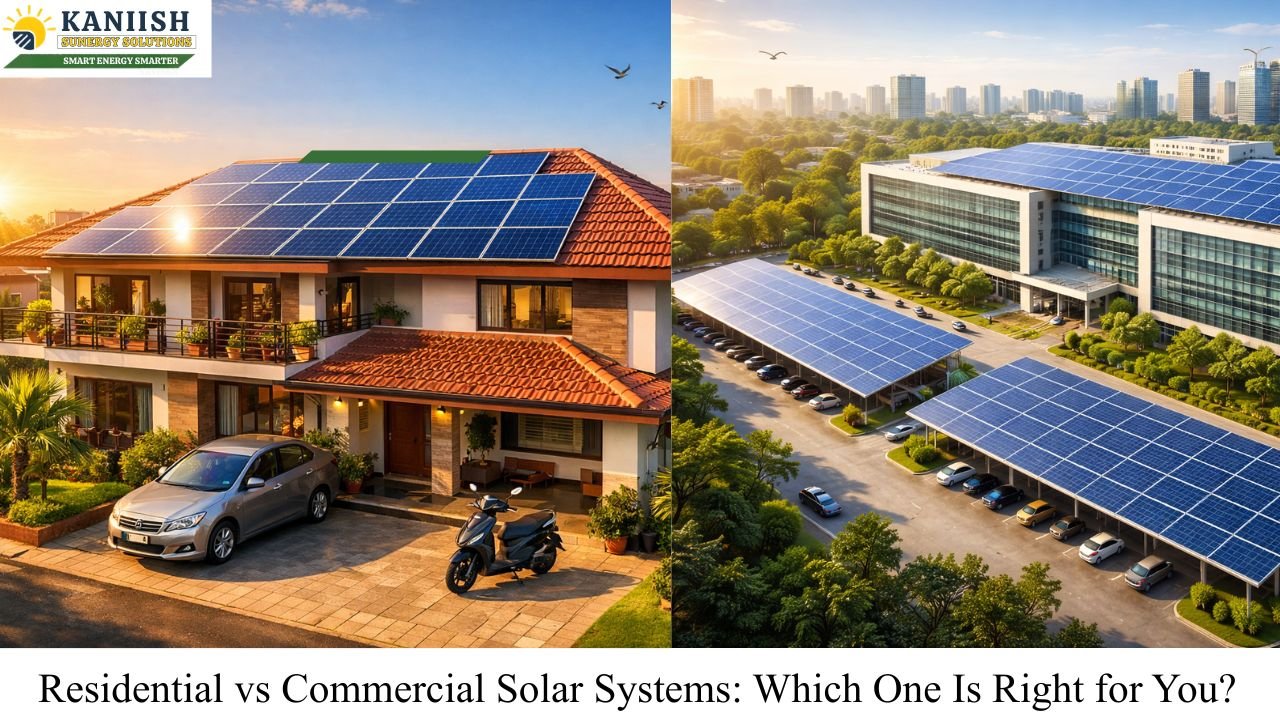
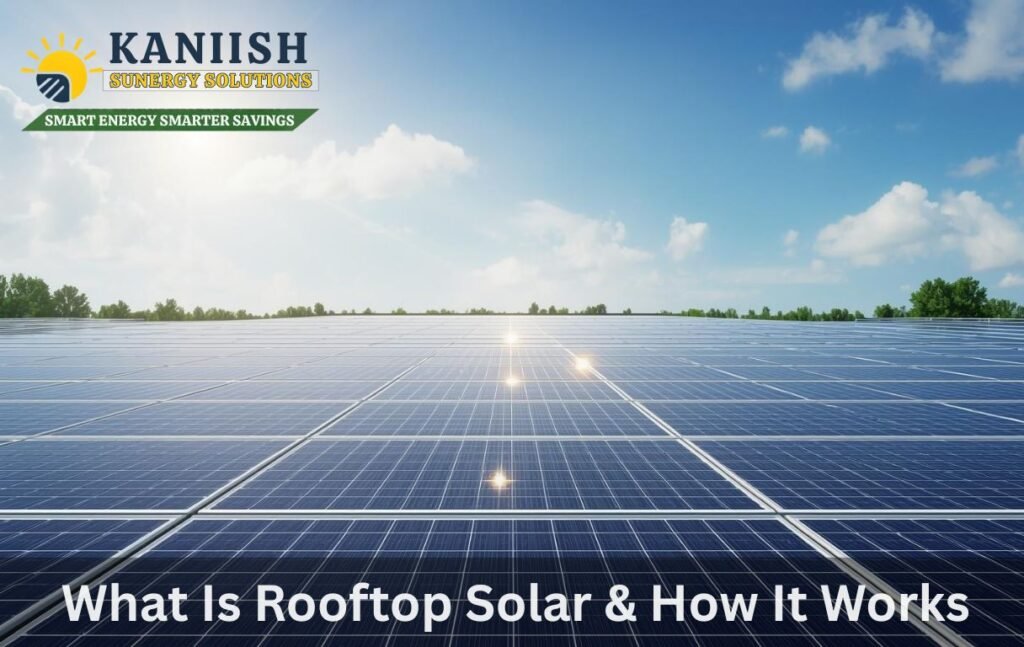
Rooftop solar is a type of solar power system that installers place on the roof of residential or commercial buildings. It uses solar panels to capture sunlight and convert it into usable electricity for your property.
A rooftop solar system lets you generate clean energy exactly where you use it instead of drawing all your power from the utility grid. This approach improves energy efficiency and supports eco-friendly living.
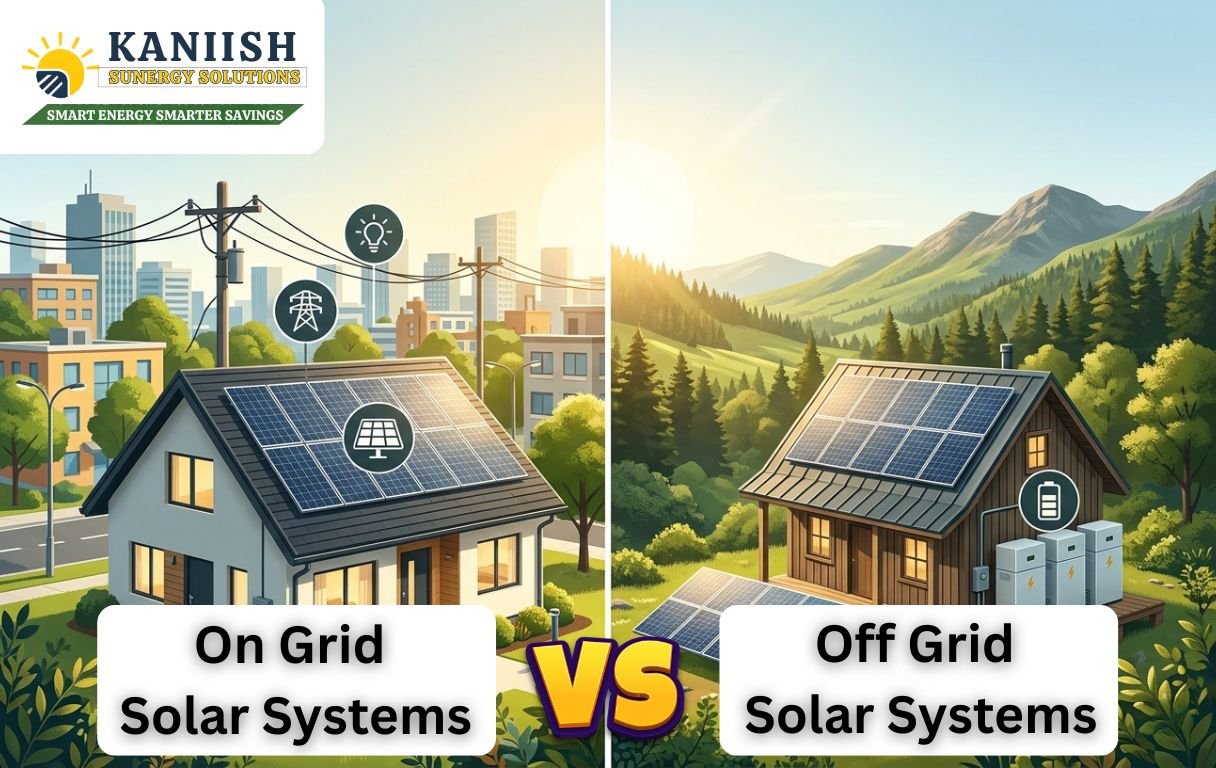
There are three types of rooftop solar systems:
a) On-grid (Grid-tied) system – Connects directly to the electricity grid.
b) Off-grid system – Operates independently and includes battery storage.
c) Hybrid system – Connects to the grid and includes battery backup.
Key Elements of a Rooftop Solar System
You don’t need technical expertise to understand rooftop solar, but knowing the basics helps.
1. Solar Panels
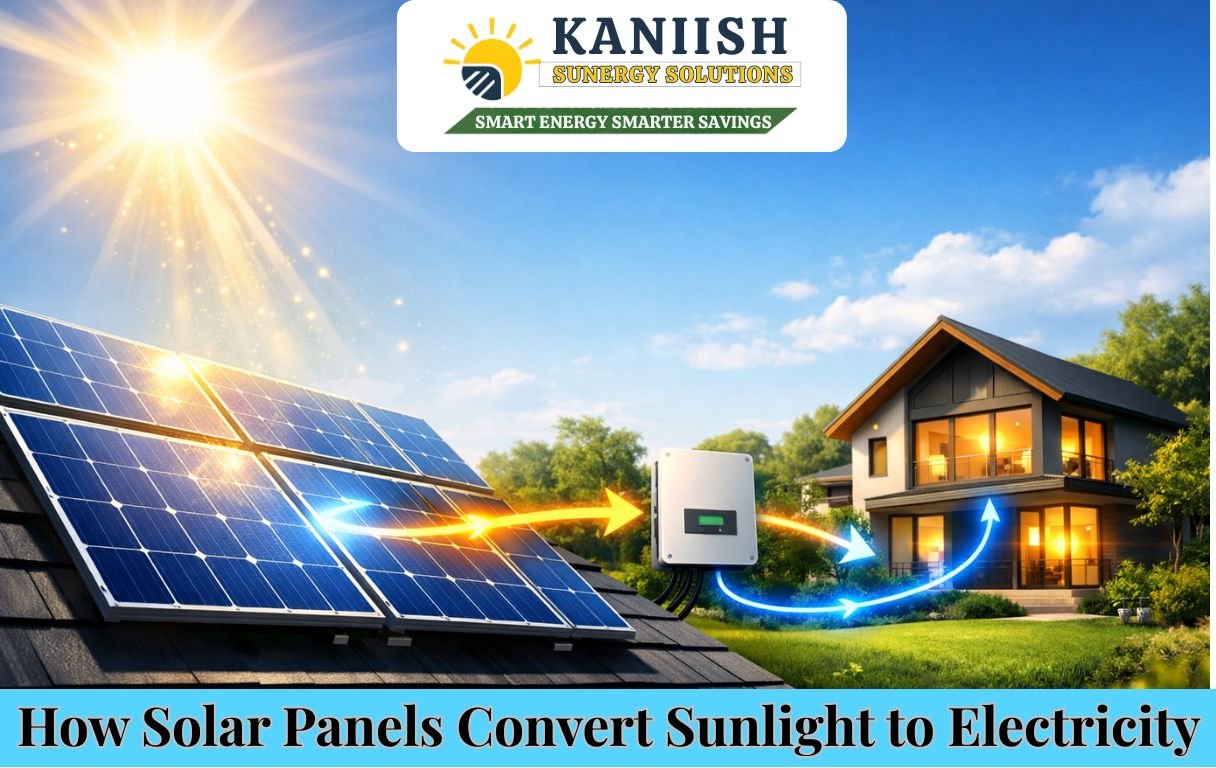
Installers mount solar panels on the roof, positioning them to capture maximum sunlight. The panels contain photovoltaic (PV) cells that convert sunlight into direct current (DC) electricity.
2. Solar Inverter
Homes and businesses use alternating current (AC) electricity to power appliances. The inverter converts the DC electricity generated by the solar panels into usable AC electricity.
3. Mounting Structure
The mounting structure secures the panels firmly to your roof at the correct angle to maximize sunlight exposure.
4. Net Meter (For On-Grid Systems)
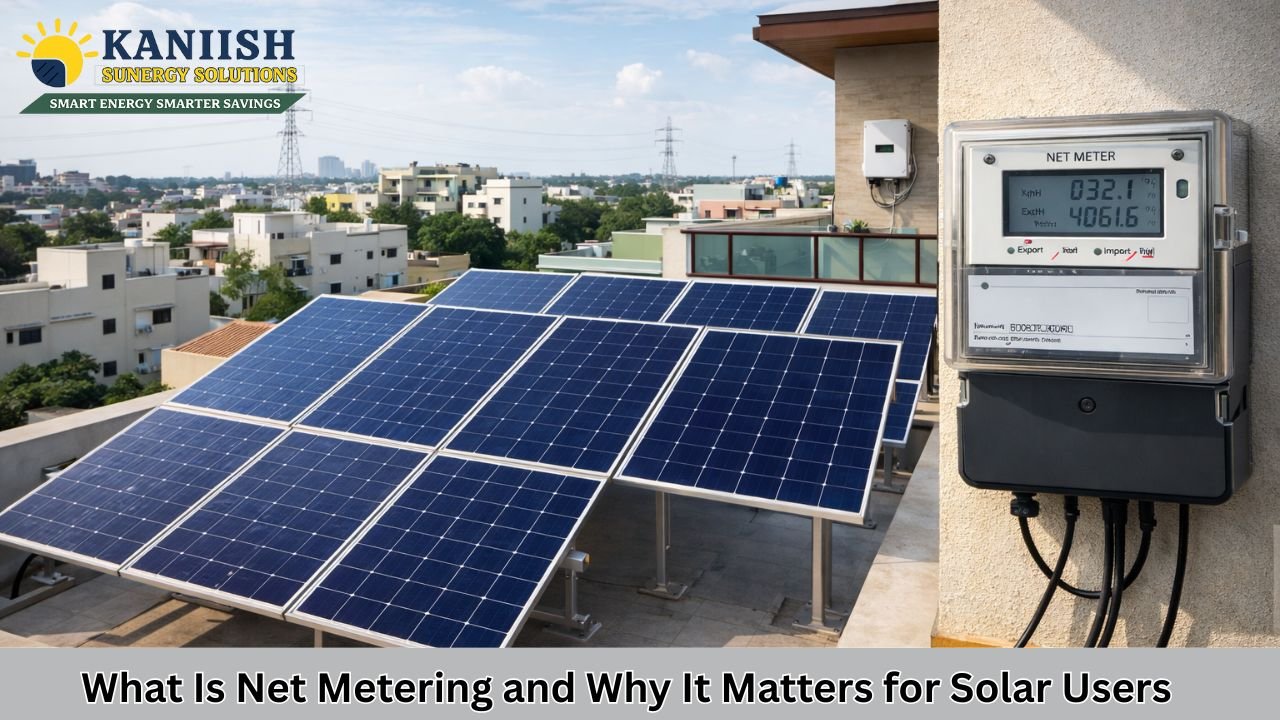
The net meter tracks the electricity you send to and draw from the grid. If you generate more power than you consume, the system sends the excess electricity to the grid, and you receive credits.
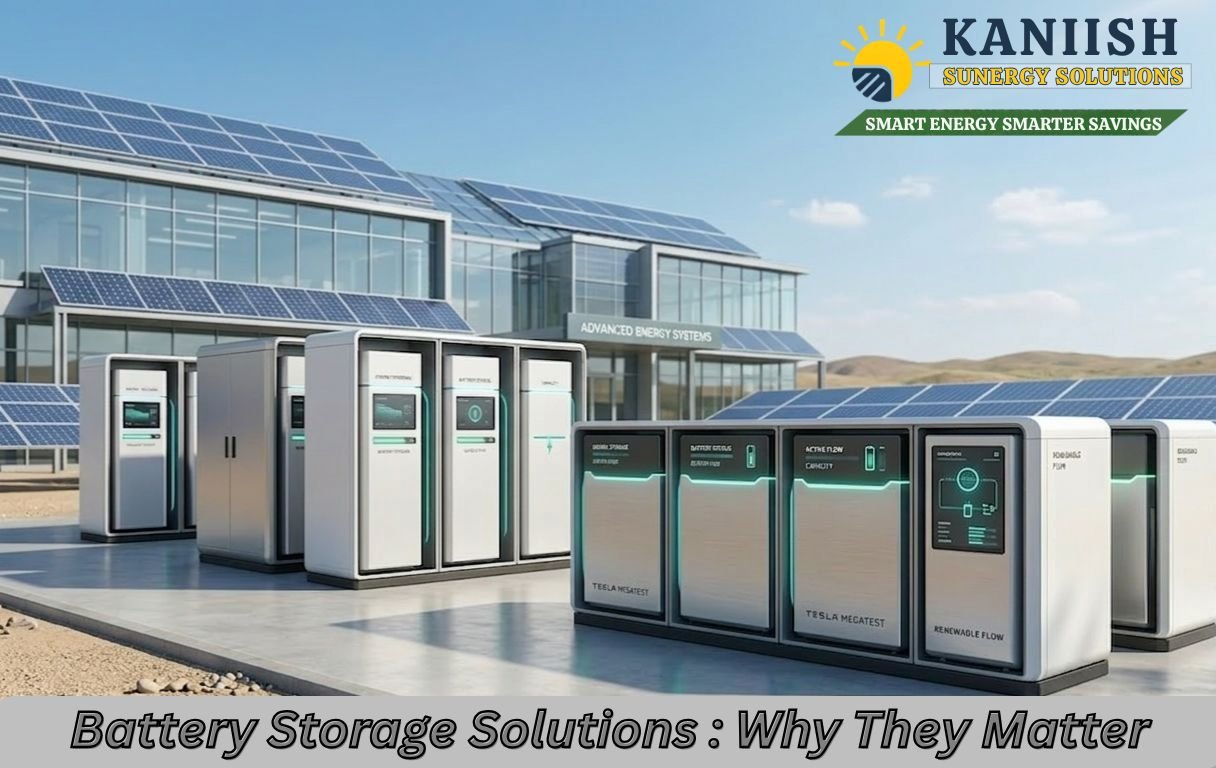
5. Battery (Optional)
Hybrid and off-grid systems store excess electricity in batteries for nighttime use or during power outages.
How Rooftop Solar Works — Step by Step
Here’s how the system works:
Step 1: Sunlight Hits the Solar Panels
During the day, solar panels absorb sunlight.
Step 2: DC Electricity Generation
The photovoltaic cells convert sunlight into direct current (DC) electricity.
Step 3: Conversion into AC Electricity
The inverter converts DC electricity into alternating current (AC), which powers your home or business.
Step 4: Powering Your Property
The AC electricity flows to your main distribution board and powers lights, fans, air conditioners, and other electrical devices.
Step 5: Managing Excess Power
In an on-grid system, the system sends excess electricity back to the grid.
In a hybrid system, the system stores extra electricity in batteries.
At night, your home draws power from either the grid or the battery system.
Benefits of Rooftop Solar1. Reduced Electricity Bills
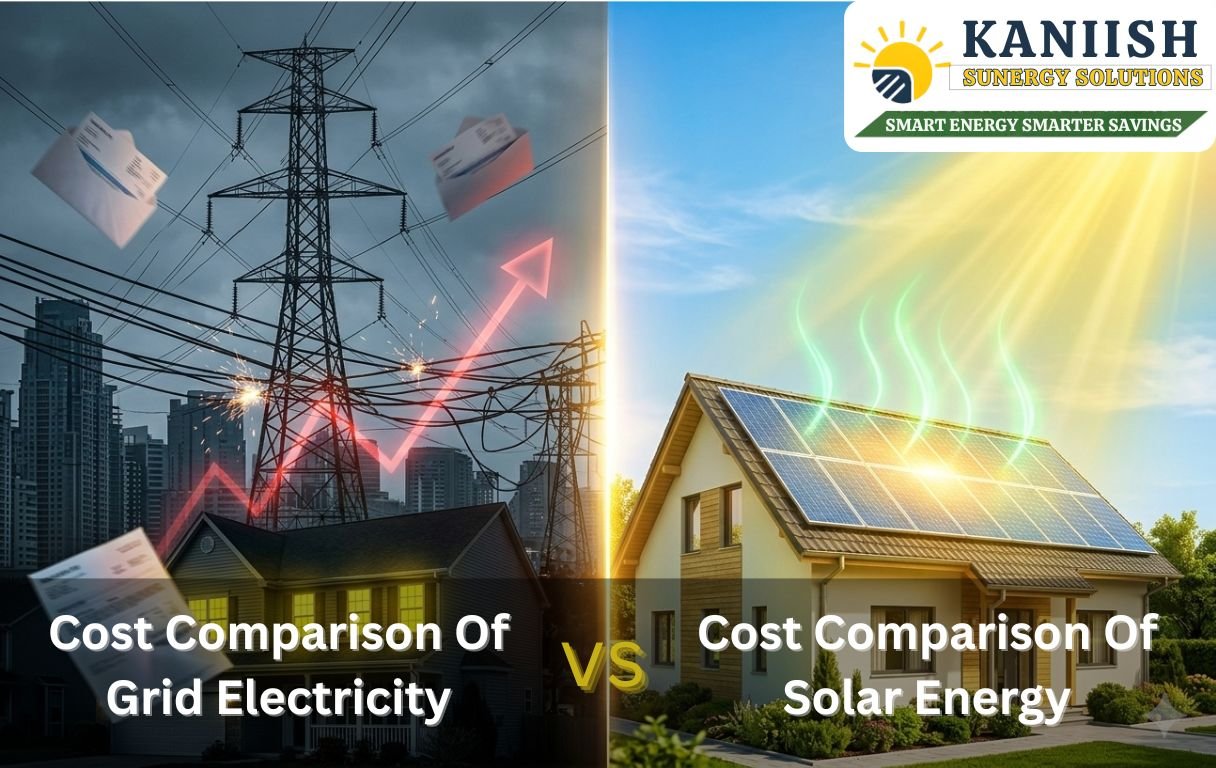
When you generate your own power, you significantly reduce your monthly electricity expenses.
2. Environmentally Friendly
Solar energy provides clean, renewable power and reduces carbon emissions.
3. Energy Independence
Generating your own electricity reduces your dependence on the grid and protects you from rising tariffs.
4. Low Maintenance
Most solar systems require minimal maintenance and operate efficiently for 20–25 years or more.
5. Increased Property Value
Homes with installed solar systems often attract more buyers and achieve higher property value.
Who Should Consider Rooftop Solar?Rooftop solar works best if:
- Your roof receives adequate sunlight with little or no shade.
- You have sufficient roof space.
- Your electricity bills are high.
- You plan to stay in the property long term.
A professional site assessment can help determine the right system size and configuration for your needs.
Conclusion
Rooftop solar offers an affordable, reliable, and eco-friendly way to generate electricity directly from your rooftop. By converting sunlight into usable power, you reduce energy costs, lower your carbon footprint, and support sustainable living.
With advancing technology and government incentives, rooftop solar has become more than just an alternative — it is a smart investment for the future. Both homeowners and businesses can use rooftop solar panels to save money while contributing to a cleaner planet.