Introduction :
Solar energy is one of the most powerful and sustainable renewable energy sources available today. As electricity prices continue to rise and environmental concerns grow, many homeowners and businesses are switching to solar power. However, many people still ask one important question How do solar panels convert sunlight into usable electricity?
In this article, we will clearly explain every step of the process — from sunlight hitting a solar panel to electricity powering your home — in a simple and easy-to-understand format.
What Is Solar Energy? :
Solar energy comes directly from the sun in the form of light and heat. Every day, the sun releases an enormous amount of energy toward the Earth. Fortunately, modern solar technology allows us to capture and convert this sunlight into electricity.
At the core of this process lies the photovoltaic (PV) effect, which enables solar panels to generate electrical power.
Step 1: Sunlight Hits the Solar Panels :
First, sunlight reaches the solar panels installed on your rooftop or property. Each solar panel contains multiple smaller units called solar cells. Manufacturers typically use silicon, a semiconductor material, to build these cells.
When sunlight — made up of tiny energy particles called photons — strikes the surface of the solar panel, the photons transfer their energy to the silicon atoms inside the solar cells. As a result, the energy interaction begins the electricity generation process.
Step 2: The Photovoltaic Effect Begins :
Next, the photovoltaic effect takes place inside the solar cell. This process drives the entire solar energy system.
Here’s exactly what happens:
- Sunlight hits the silicon material.
- Photons energize the electrons inside the atoms.
- The energized electrons break free from their atoms.
- An internal electric field pushes these free electrons in one direction.
Consequently, the movement of electrons creates an electric current.
In simple terms, when electrons move, electricity forms.
Step 3: Solar Panels Generate Direct Current (DC) :
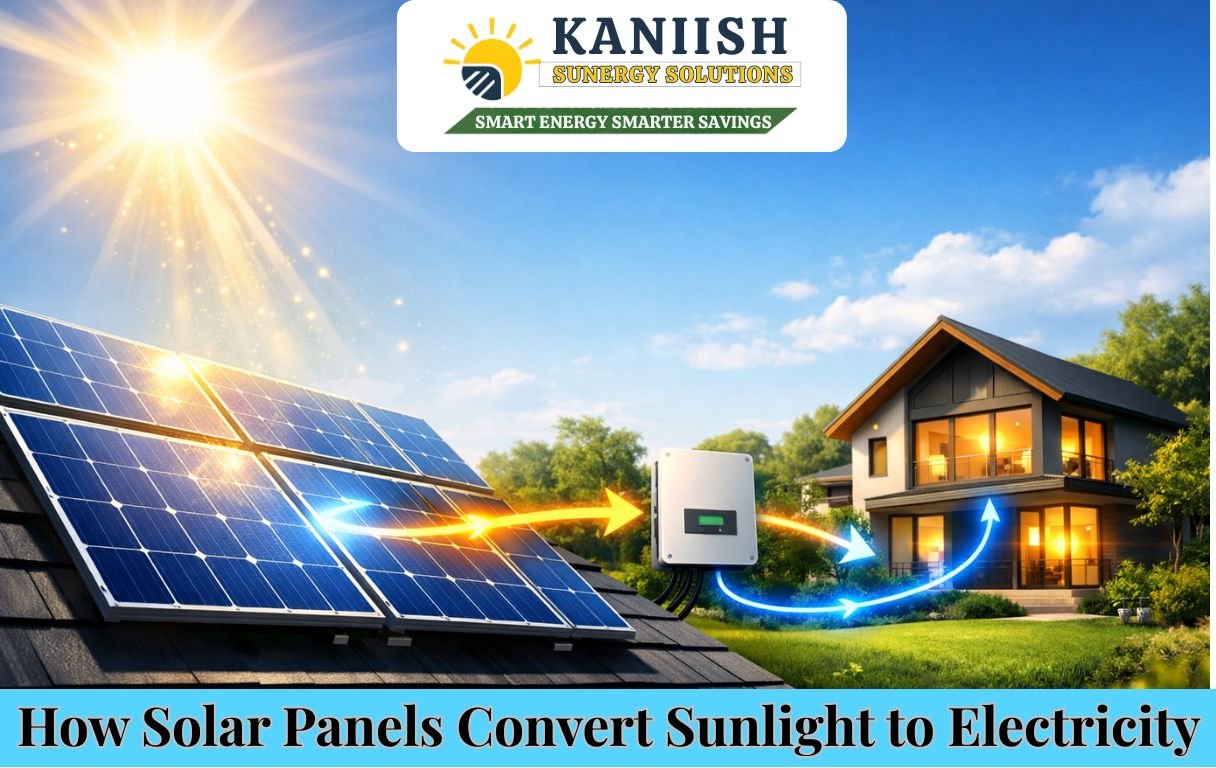
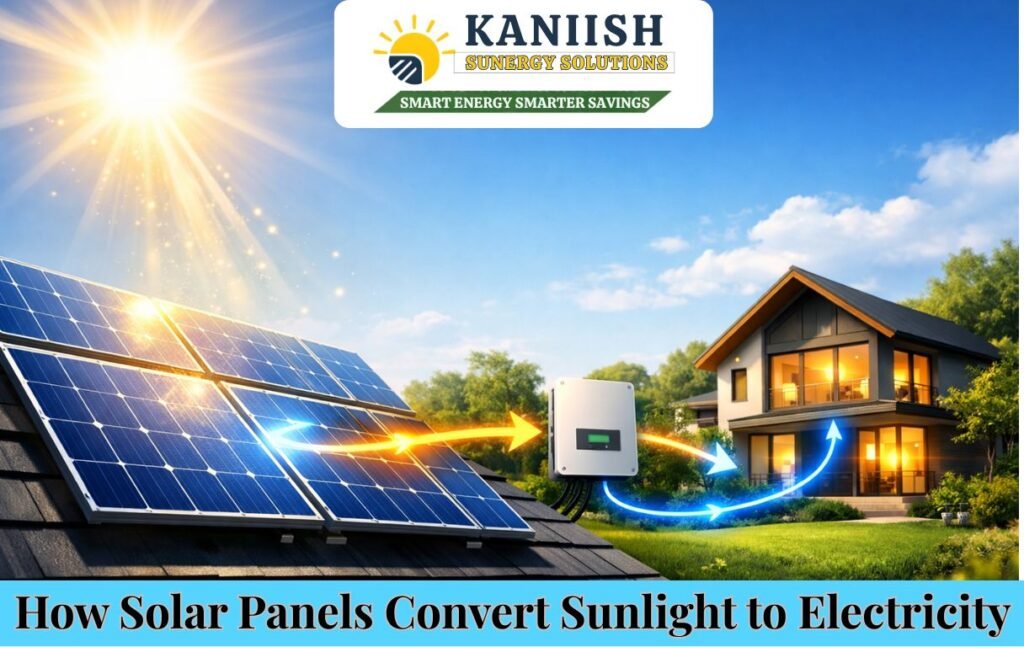
As electrons flow through the solar cells, the system generates Direct Current (DC) electricity. However, most household appliances and electrical systems operate on Alternating Current (AC) electricity.
Therefore, you cannot use DC electricity directly in your home. At this stage, the system requires an important component to convert the power.
Step 4: The Inverter Converts DC to AC :
At this point, the inverter plays a crucial role in the solar power system. In fact, many experts consider it the heart of the entire setup.
The inverter performs two key functions:
- It converts DC electricity into AC electricity.
- It ensures the electricity matches your home’s voltage and safety standards.
Once the inverter completes the conversion, the AC electricity flows into your home’s electrical panel. From there, your home distributes the electricity wherever needed.
Step 5: Your Home Uses the Solar Power :
Now, your home can actively use the solar-generated electricity to power:
- Lights
- Fans
- Air conditioners
- Refrigerators
- Televisions
- Other electronic appliances
If your solar panels produce more electricity than your home consumes, the system handles the extra energy efficiently.
For example:
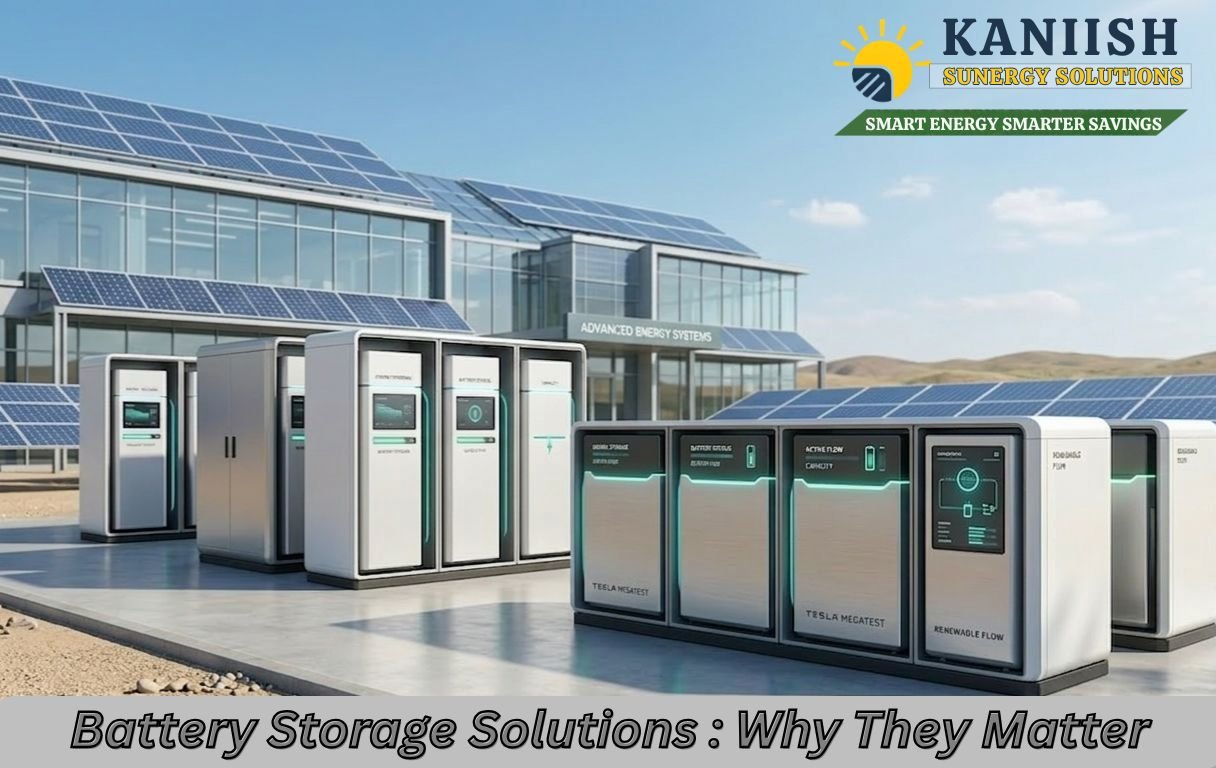
- You can store excess electricity in a battery storage system.
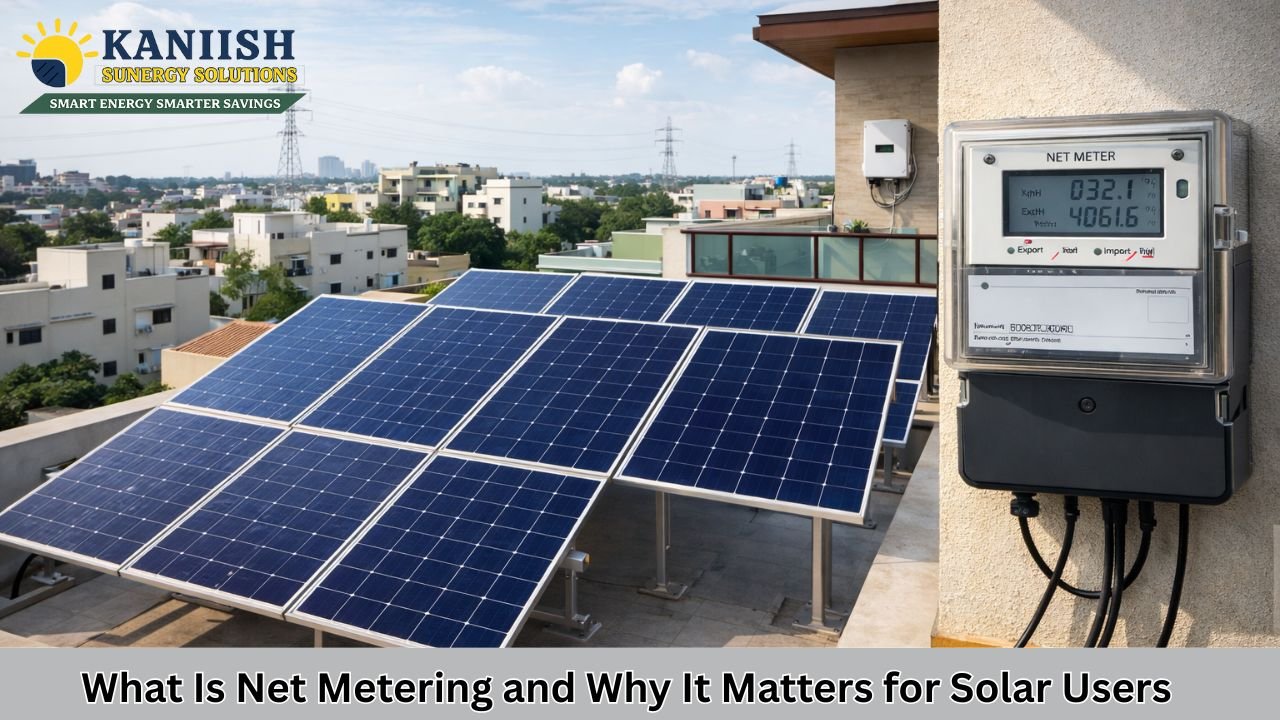
- Alternatively, you can send the surplus electricity back to the grid through net metering.
As a result, you maximize energy usage and reduce electricity costs.
What Happens at Night or During Cloudy Days? :
Naturally, solar panels cannot generate electricity at night because sunlight is not available. Similarly, energy production may decrease on cloudy days.
However, you still have reliable power options:
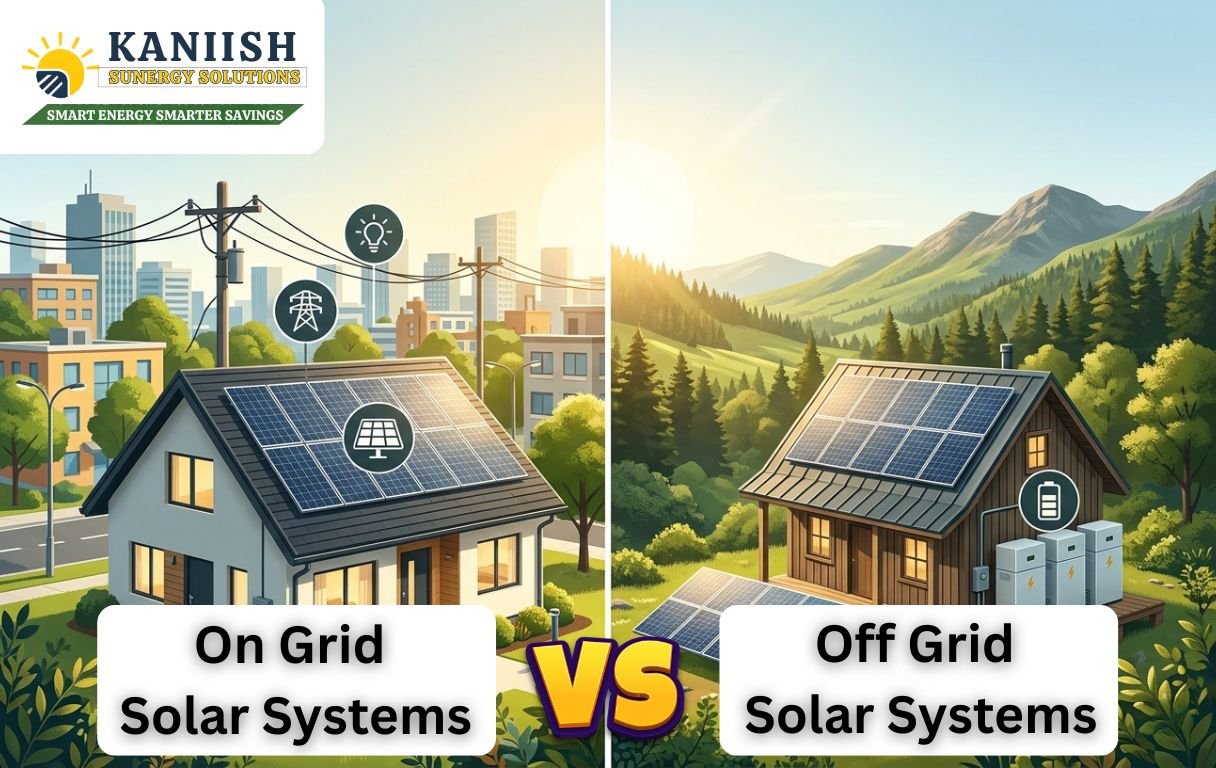
- Grid-connected systems automatically draw electricity from the main grid when solar production drops.
- Battery storage systems supply stored solar energy when sunlight is unavailable.
Therefore, you can enjoy continuous and uninterrupted power throughout the day and night.
Essential Components of a Solar Power System :
A complete solar power system includes several important components:
- Solar Panels – Capture sunlight and generate electricity
- Inverter – Converts DC electricity into AC electricity
- Mounting Structure – Holds the panels securely in place
- Wiring and Electrical Panel – Distributes electricity safely
- Battery (Optional) – Stores excess energy
- Net Meter – Tracks energy sent to and received from the grid
Together, these components ensure smooth and efficient solar power generation.
Benefits of Solar Energy :
Today, more people choose solar energy because it offers numerous advantages. For instance:
- It significantly reduces electricity bills.
- It requires minimal maintenance.
- It protects the environment by reducing carbon emissions.
- It provides a renewable and sustainable energy source.
- It increases property value.
- It promotes energy independence.
Moreover, solar panels contain no moving parts, which reduces wear and tear. Most systems last 25 years or longer, making them a long-term investment.
Why Solar Energy Represents the Future :
As global temperatures rise and fossil fuel prices continue to fluctuate, renewable energy solutions have become essential. Governments across the world now encourage solar installations through subsidies and incentives.
Furthermore, technological advancements have improved solar panel efficiency while lowering installation costs. Consequently, solar power has become more affordable and accessible than ever before.
For these reasons, solar energy no longer represents just an alternative option — it represents the future of clean, reliable electricity.
Conclusion :
Solar panels convert sunlight into electricity through the photovoltaic effect. When sunlight energizes electrons inside the solar cells, those electrons begin to move and generate electrical current. Then, the inverter converts that electricity into usable power for homes and businesses.
By understanding how solar panels work, you can make a smart and sustainable energy decision. If you plan to switch to solar power, now is the perfect time to take action and invest in a cleaner future.