
Introduction :
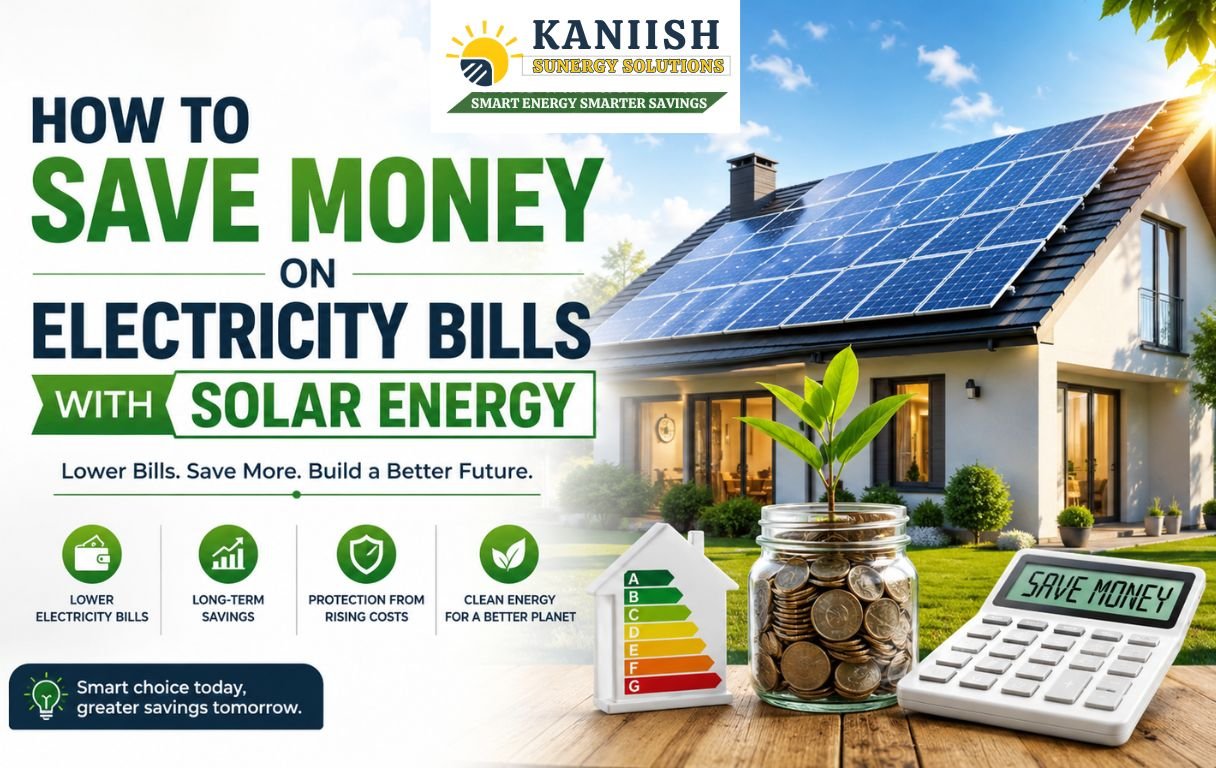
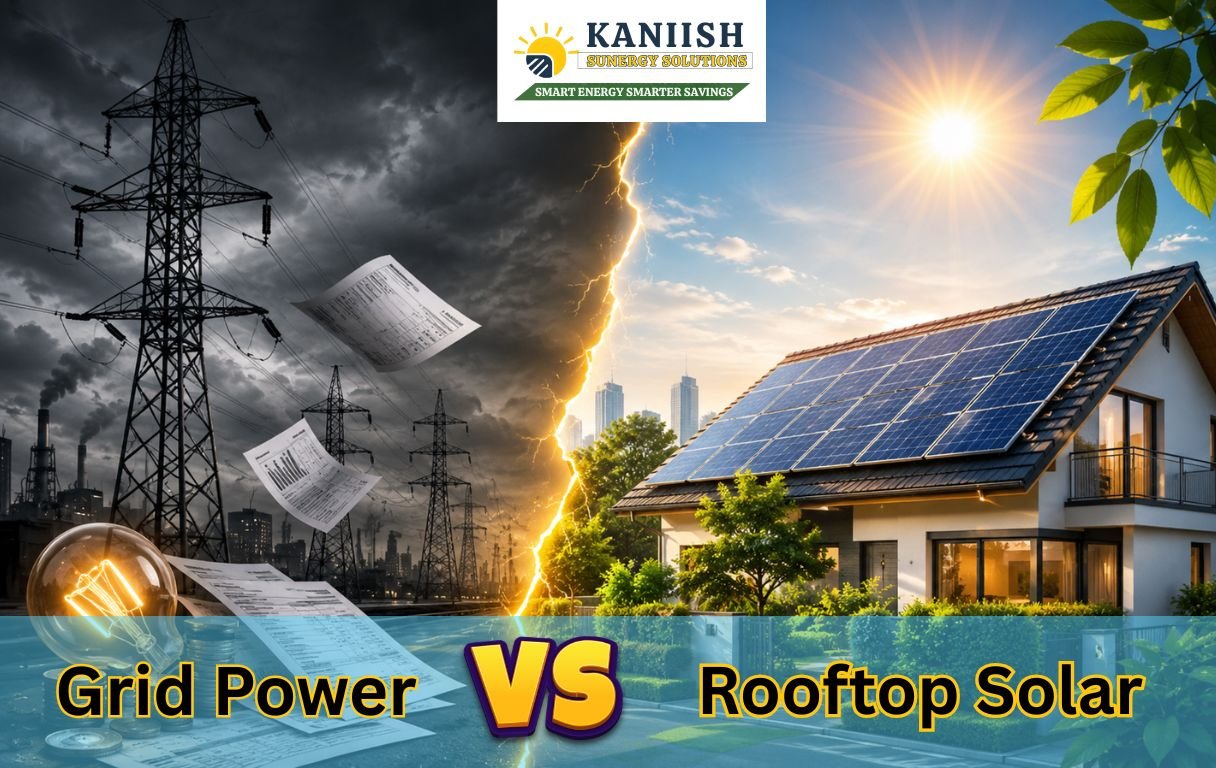
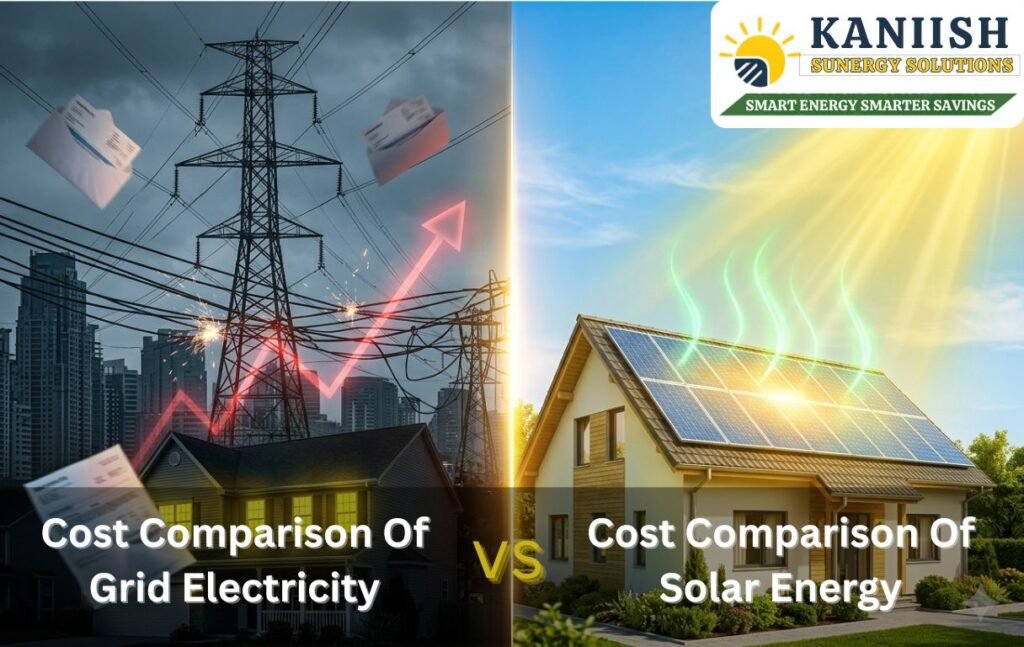
In recent years, with the increase in electricity tariffs and growing environmental awareness, many homeowners and businesses are actively exploring renewable energy alternatives. As a result, numerous organizations and households are switching from grid electricity to solar energy solutions. Consequently, one of the most frequently asked questions in this solar vs. grid electricity comparison is: Is grid electricity more economical than solar in the long run?
As India continues to expand its renewable energy infrastructure, with states like Tamil Nadu at the forefront of solar adoption, it is becoming increasingly important to understand the cost difference between solar power and traditional grid electricity. In this context, evaluating both short-term investment and long-term savings is essential for smart financial planning. Moreover, homeowners and businesses must compare installation costs, maintenance expenses, and electricity bill savings. Therefore, this blog provides an in-depth comparison — from upfront solar installation costs to long-term financial benefits — giving you all the information needed to make an informed and cost-effective energy decision.
Understanding Grid Electricity Costs :
To begin with, grid electricity is the power supplied by the local electricity board through existing transmission and distribution networks. However, despite its accessibility and convenience, the cost of grid electricity depends on several important factors. In fact, the electricity tariff structure is influenced by multiple variables, including fuel prices, government regulations, infrastructure costs, and demand patterns.
- Fuel prices (coal, gas, etc.)
- Transmission and distribution losses
- Government taxes and subsidies
- Increasing demand
Electricity Cost Breakdown by major Sources of Grid Electricity :
Monthly Electricity Bills
In India, electricity tariffs rise every few years. Commercial and industrial users typically are charged higher per-unit rates than residential users.
Tariff Slabs
The slab system is used in most states — the more you consume, the higher per-unit cost.
Long-Term Price Increase
Historically, inflation and fuel costs cause electricity rates to increase every year.
Result: You never stop paying monthly bills for the rest of your life, and you own nothing in electricity generation.
Understanding Solar Energy Costs :
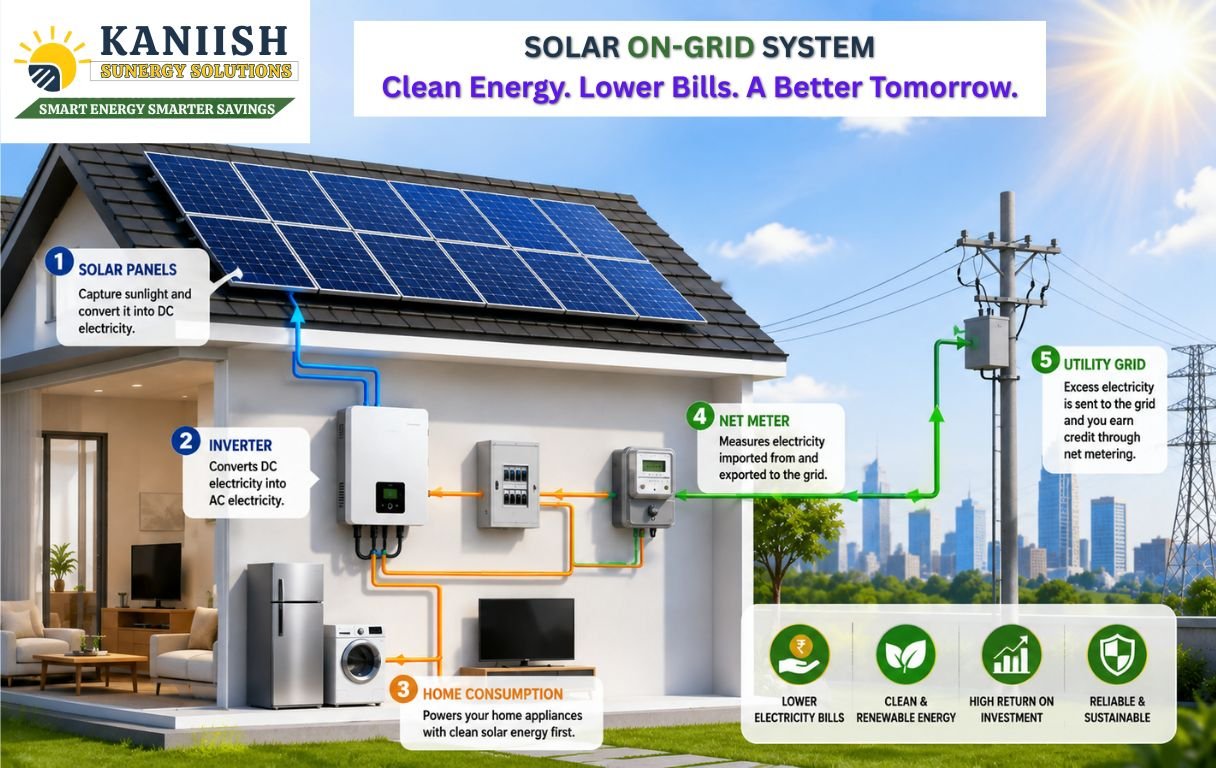
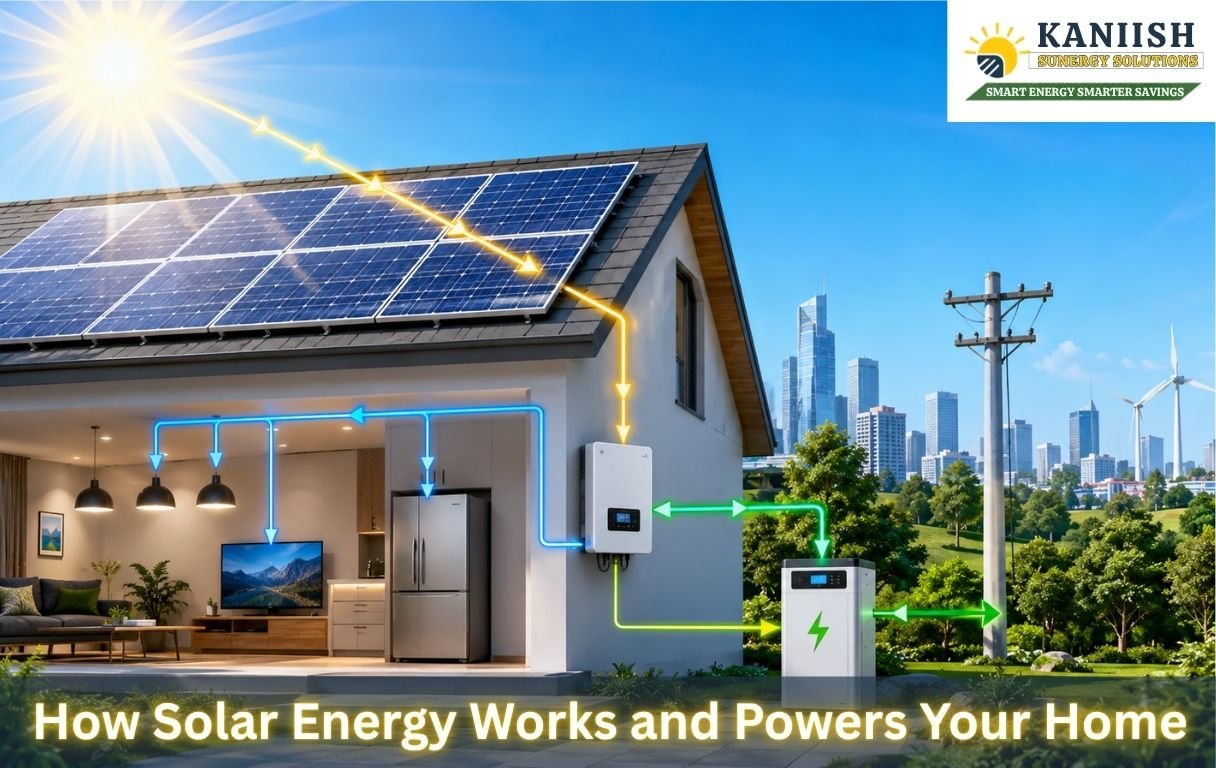
To begin with, the process of getting solar energy mainly involves setting up a solar power system — most commonly a rooftop solar system — that captures sunlight and converts it into electricity through high-efficiency solar panels. In simple terms, solar panels absorb sunlight and generate direct current (DC) power. Consequently, this renewable solar energy can be used to power homes and businesses while reducing electricity costs.
Initial Investment
The main expense involved with solar energy is the initial installation cost, covering:
- Solar panels
- Solar inverter
- Mounting structure
- Wiring & installation
- Net metering setup
While their upfront cost is relatively high, government subsidies make for a much lighter load for household customers.
Comparison of the Cost: Solar and Grid Electricity :
1 Initial Cost
Grid Electricity: No Installation cost(charge connection only).
Solar Energy: One-time installation investment.
✔ For short-term affordability → Grid wins.
✔ Solar monthly bills beat others in saving long-term.
2 Monthly Expenses
Electricity from the grid: Monthly bills each month
Solar Energy: Small or no electricity costs ¬ (depends both on system size and usage).
✔ Massively cuts monthly payments.
3 Long-Term Cost (25 Year Study)
Solar systems, on the other hand, typically last 25 years or more.
- The price of electricity from the grid goes up.
- Solar energy gives free power after the payback period (which is around 3–6 years in India).
Over two-and-a-half decades, users of solar often save lakhs compared to grid-dependent users.
4 Maintenance Costs
- Grid Electricity: No maintenance responsibility.
- Solar Power: Requires very little maintenance (panel cleaning and occasional servicing).
Importantly, the fact that solar panels do not have moving parts makes them highly durable and reliable. As a result, solar panel maintenance costs remain low compared to conventional power systems. Therefore, homeowners investing in a solar energy system benefit from minimal upkeep and long-term cost savings.
5 Power Reliability
- Electricity from the Grid: Power cuts and voltage fluctuation prone.
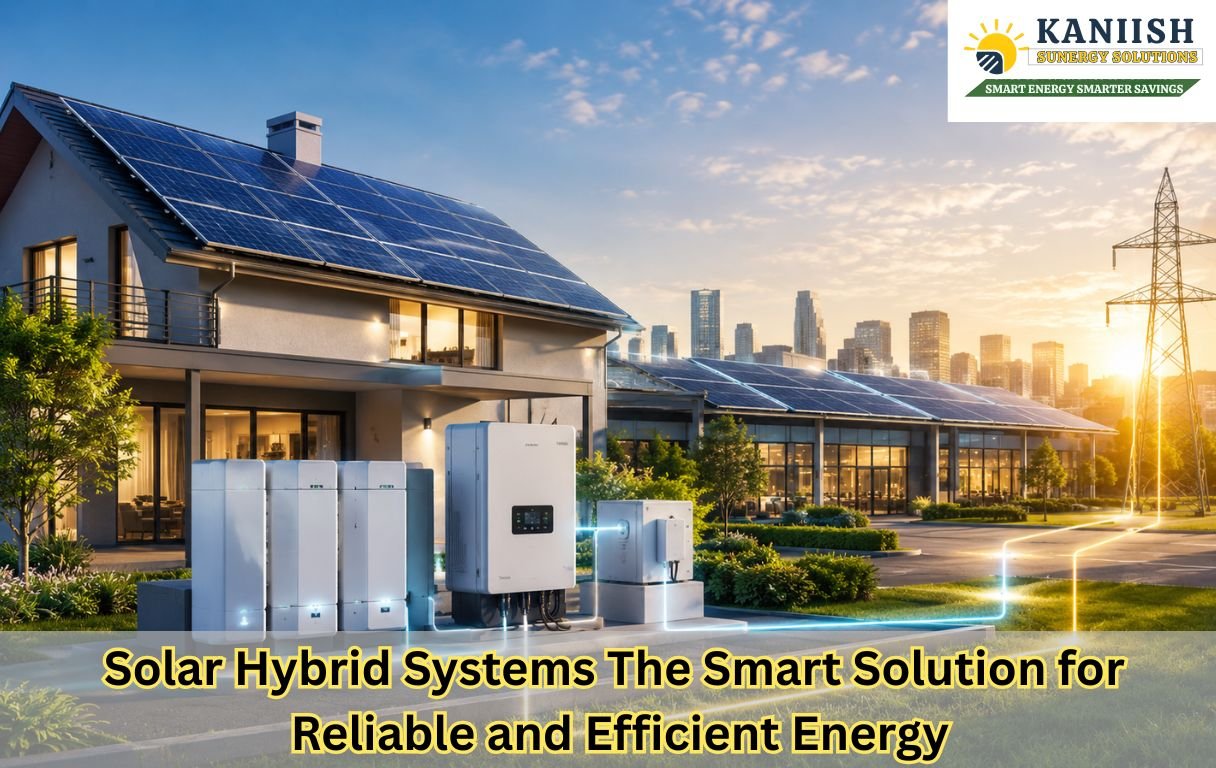
- Solar Energy: Dependable, especially when paired with battery storage.
Solar provides more independence in places with lots of outages.
Environmental Cost Comparison :
Beyond money, there’s an environmental consideration:
- Most of the electricity supplied to grid in India is generated using coal based power stations.
- Solar energy generates clean, renewable power with no emissions.
That means, less carbon footprint and saving some cash by switching to solar.
When Grid Electricity Makes Sense :
Grid electricity may still make sense if:
- You are renting a house/apartment.
- Your roof is not suitable for installing solar.
- You are using extremely low amount of power.
When to Choose Solar Energy Instead :
Solar is ideal if:
- You are a homeowner or commercial property owner.
- Your electricity bill is high.
- You want long-term savings.
- You want energy independence.
Government Support in India :
Moreover, the Central Government actively encourages rooftop solar under national renewable energy missions. In addition, incentives such as tax credits and net metering policies make solar energy systems more affordable and financially attractive for homeowners. As a result, rooftop solar adoption continues to grow across residential sectors.
Final Verdict: Which Is Simplest on the Wallet?
✔ Short-term: Electricity from grid is cheaper.
✔ Over the long-term, solar energy is WAY more affordable.
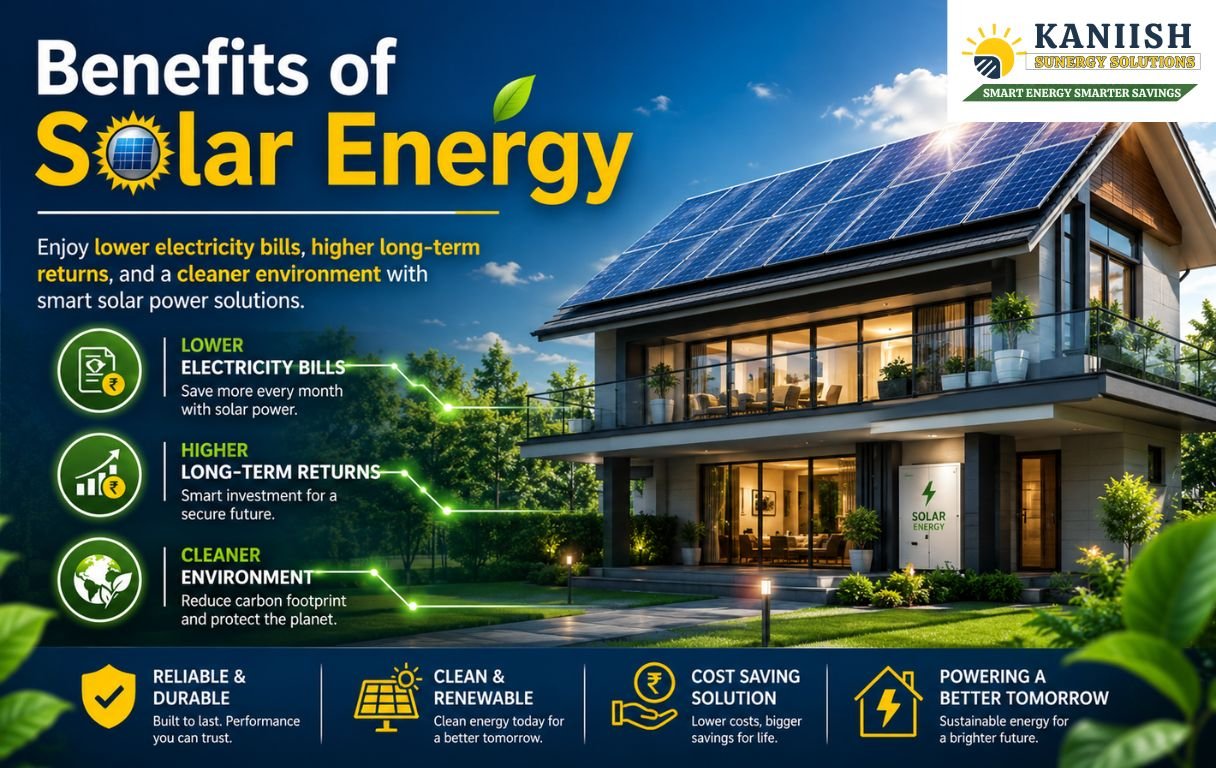
Though solar is an upfront capital investment, it provides:
- Lower lifetime electricity cost
- Protection against tariff hikes
- Energy independence
- Environmental benefits
Conclusion :
The bottom line is this: solar energy vs. grid electricity is really a question of long-term financial planning. On the one hand, solar turns electricity into a once-in-a-lifetime expense with decades of returns rather than continuous monthly payments that shopping for the best deal can only ameliorate. On the other hand, grid electricity is like your mortgage or rent — a recurring cost you continue to pay month after month.
If you are looking ahead—for financial stability, sustainability and energy security—solar simply makes more sense.
Make the switch today, save tomorrow and harness power from the sun.