Uncategorized

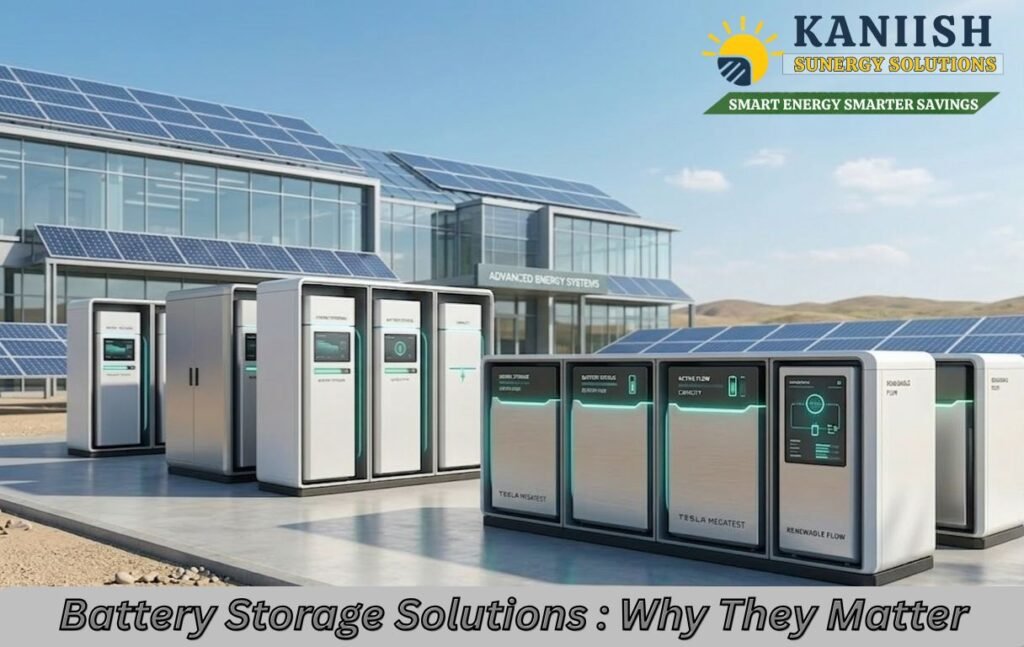
Modern battery storage system with solar panels for efficient energy use
Uncategorized

The Importance of Battery Storage Solutions

And still, energy consumption is increasing day after day. Power is essential almost all the time in homes, offices and industries. At the same time, people have begun to scrutinize where that energy comes from. This has led to an increasing need for clean and sustainable energy. So where do battery storage solutions come into play? In other words, they address a very real need. They do not waste unnecessary energy but store it to provide when required. This makes energy more reliable, efficient and manageable. What Battery Storage Really Means : So what does battery storage do? Simply, battery storage is a way to store energy for later use. For example, solar panels typically produce more electricity in the afternoon than you will probably use. Without storage, this energy is wasted or returned to the grid. But with a battery system you can capture that extra power and use it up at night. This way, you can take charge of when and how you consume power. And these systems vary a lot in size. Fewer units are effective for homes, and bigger systems anchor businesses and industries. Others install batteries mainly for backup. Some use them every day to balance energy better. Why It Matters More Than Ever : Renewables deliver enormous benefits but present a challenge. Solar panels only work in the daytime, and wind turbines are subject to the weather. Energy production thus doesn’t always align with energy demand. That is where battery storage comes into play. Batteries store excess energy, rather than letting it go to waste. And then, when production declines they provide power instantly. As a result, this makes renewable energy more reliable. In other words, battery storage transforms an intermittent energy source into a dependable one. As a result, homes and businesses can PullItyank their dependence on fossil fuels. Meanwhile, battery systems support more intelligent energy consumption. They assist users in determining when and how to use energy. As a result, this increases efficiency and reduces costs. The Real Benefits People Notice : When people start using battery storage they notice the difference almost immediately. First, electricity bills go down. You can save energy when rates are low and get it during peak hours. And this nets real savings over time.” Next, you gain more independence. You become more independent of the grid, particularly when supply is unstable. That’s why you have more power in your hands. Then, backup power becomes reliable. Power cuts are no longer a hindrance to your daily schedule or business functions! Instead, critical systems continue to operate unabated. It is also environmentally friendly. Using stored potential energy allows you to reduce your reliance on fossil fuels.) This reduces carbon emissions. Finally, energy usage becomes smarter. You can distribute consumption over the course of a day rather than just in on-peak time. It also relieves the grid of stress, which enhances overall efficiency. Technology Is Improving (and Accelerating) : Battery technology has evolved quite a bit in the past few years. Currently, lithium-ion batteries dominate the industry for their high efficiency and long life. Meanwhile, newer technologies keep coming up. (It claims, for example, that solid-state and flow batteries offer improved safety and performance.) This trends makes the future of energy storage more auspicious. They come with advanced management tools in modern battery systems. These systems monitor performance, manage energy flow and optimize utilization. This means batteries endure longer and work more efficiently. In addition, many systems connect with smart grids today. This results in improved coordination of energy generation, storage and consumption. Looking Ahead : Battery storage, as we progress, will become even more significant. The use of renewable energy is growing, so the need for effective storage as well. New technologies such as electric vehicles, smart homes or new industrial plant depend on ideal energy systems, for example. Storage is needed to work optimally in these types of systems. This is why governments and companies are pouring money into battery technology. This pivot illustrates quite clearly where the future lies. For businesses, this translates to greater cost control and operational efficiency. For homeowners, it offers convenience and peace of mind. Overall, it enables a cleaner and more stable energy system. Conclusion : Ultimately, what it comes down to is that battery storage solutions make energy more usable. They help you save money, stay prepared in the event of outages, and better leverage renewable energy. They also provide you with more control over how and when you leverage power. As energy demands rise, such flexibility is crucial. As such, battery storage is not merely a prudent investment—it’s an indispensable preparation for a more reliable and sustainable future.
Selecting the Best Solar Panel for Your Roof
Uncategorized

Selecting the Best Solar Panel for Your Roof

Introduction : Are You Thinking About Switching to Solar? If so, selecting the perfect solar panel for your roof is the first and most crucial step. Today, most homeowners prefer solar energy for minimizing electricity bills and gaining energy independence. But to maximize performance and long-term savings, you must choose the correct panel. Understand Your Energy Needs : You have to begin by determining how much electricity you use each day. This allows you to determine the system size necessary. For example, a small home will need fewer panels than a large house or commercial building which would require a larger capacity. Make sure to check past electricity bills before making up your mind. Types of Solar Panels : Another step to take is research the different types of solar panels on the market. Monocrystalline Solar Panels : These panels have high efficiency with a long lifespan. Also, they are effective even in minimal roofing space. Polycrystalline Solar Panels : These panels are cheaper than monocrystalline versions. However, they lose bit of efficiency. Thin-Film Solar Panels : They are thin and flexible panels. They are also bulky, needing more installation space. So you should decide based on your budget, your space and your energy goals. Check Your Roof Condition : You need to examine your roof condition before installation. A solid, undamaged roof underpins long-term solar performance. And roof direction and angle matter, too. South-facing roofs tend to produce more electricity. Consider Efficiency and Performance : Solar panel efficiency directly affects how much energy output they can produce. Panels with a higher efficiency generate more power per unit of space. They do not cost as much upfront but generate better returns over time. So you have to make a trade-off between cost and performance. Budget and Government Subsidy : GET SOLAR Solar installation comes with some upfront investment. But it cuts electric bills when it is online. Govt subsidies and incentives make the solar systems affordable. Therefore, before installation you must check available subsidy options. Choose a Trusted Brand : In addition, opt for a trusted solar brand to get reliability backed by quality. You get better quality and warranty, from trusted brands. Another benefit is that solar panels normally have a 20–25 years of warranty, which ensures your long-term investment.  Professional Installation and Maintenance : Lastly, when it comes to professional installers, they will properly set up the system for you as well. So an expert installation boosts efficiency and safety. Once installed, routine cleaning and maintenance keep them running efficiently. Conclusion : Take home message: Selecting solar for your roof is not a spur of the moment decision. You can make a smart decision by knowing your energy needs, weighing the types of panels, examining your roof, and considering your budget. In the end, the correct solar solution saves you money on your electricity bill and is a step in support of your sustainable future.

How Kaniish Sunergy Team Designs Custom Solar Solutions
Uncategorized

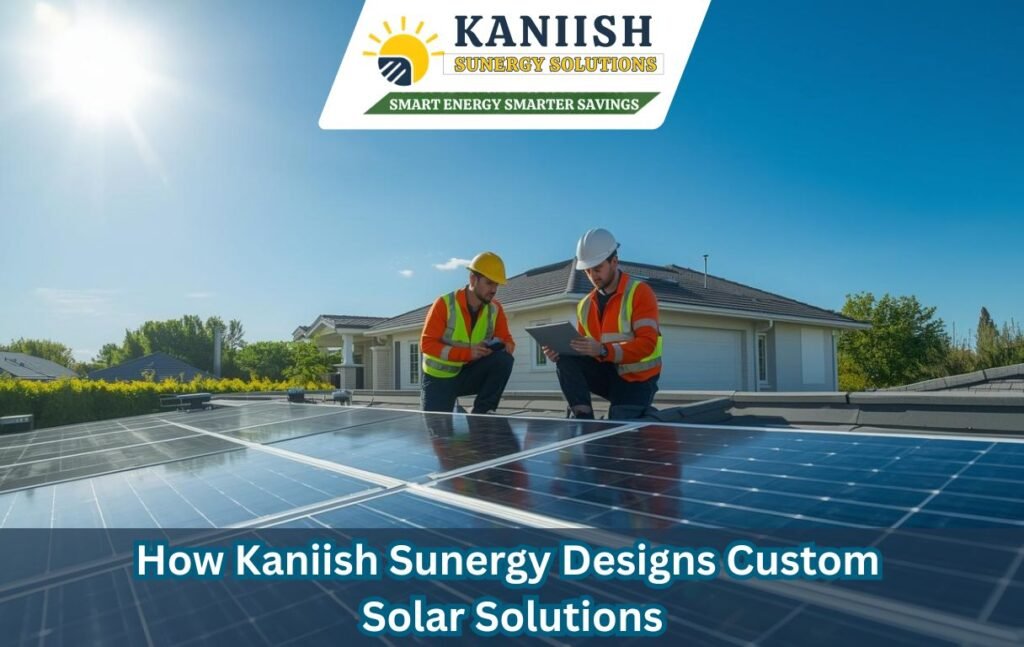
How Kaniish Sunergy Team Designs Custom Solar Solutions

Introduction: With the prices of electricity increasing and some environmental concerns to that effect, more and more homeowners and businesses are opting for solar energy as a destructible, renewable source of power. But no two buildings share the same energy needs, roof structures or budget. Custom solar solutions shine through here. Kaniish Sunergy is a provider of solar system design, developing systems around each customer’s individual needs. Instead of a cookie-cutter installation, the company tracks energy consumption, infrastructure, and location to ensure its customers get the best value solar power performance. Understanding Customer Energy Needs: Before designing a custom solar solution, it is essential to understand the customer’s electricity usage. Therefore, Kaniish Sunergy begins with a careful assessment of past electricity bills. This, in turn, allows them to accurately calculate the customer’s average energy consumption, ensuring an efficient and cost-effective solar installation. The team can find: 1.Daily and monthly power usage 2.Peak electricity consumption times 3.Solar power could provide potential energy savings Using these considerations, Kaniish Sunergy can provide an accurate energy estimate for each customer and design a system that will suit their requirements. Site Inspection and Roof Assessment: Not every roof is the same. In addition, the efficacy of a solar system is very much dependent on roof orientation, sunlight exposure, and available space. Hence Kaniish Sunergy carries out a comprehensive site survey with special attention into: 1.Roof size and structure 2.Orientation and pitch of the roof 3.Shadowing from nearby trees or buildings 4.This is only with respect to available space for solar panel installation This extensive evaluation helps to accurately place solar panels to allow for greater sunlight exposure throughout the day. Customized System Design: After the assessment, Kaniish Sunergy uses the information collected to create a solar system customized to fit the consumer’s roof and energy needs. The design process includes: 1.How to choose the right capacity of solar panel 2.Opt for quality brands like Waaree, Adani and Vikram Solar 3.The best placement of panels to generate energy 4.Inverter and electrical system layout design In the end, this tailored recipe is what delivers optimal performance, efficiency, and longevity. Government Subsidy Assistance: Also, one of the main benefits of solar energy installation in India is that it has subsidies from the government. But most homeowners don’t know how to qualify for these benefits. Kaniish Sunergy helps customers by: 1.Helping them navigate government solar subsidy programs 2.Assisting with the application process 3.Contributing to the lower cost of installation overall This makes solar power cheaper and more convenient for businesses and households alike. Professional Installation Process: This step comes after all designs and approvals are finalized. Every component is installed safely and according to the code by trained technicians from Kaniish Sunergy. Typically, the installation process includes: 1.First, securely mount solar panels to your roof 2.Installing inverters and electrical connections 3.Setting up monitoring systems 4.Performance testing of the entire system By taking these precautions, the crew ensures that everything is up to code in terms of safety and quality. Monitoring and Maintenance Support: Solar systems are low maintenance, but constant monitoring is needed for maximizing efficiency. Hence the reason Kaniish Sunergy goes beyond install to bring peace of mind! Customers receive guidance on: 1.Monitoring solar energy generation 2.Performing basic system maintenance 3.Troubleshooting issues when necessary Furthermore, such ongoing support ensures the proper optimization and long-term efficiency of the solar system, guaranteeing that it operates effectively and delivers maximum solar energy benefits for years to come. Conclusion: To sum up, solar energy is one of the best investments homeowners and businesses can make. However, optimizing a solar system is crucial to ensure maximum benefits. In addition, factors such as energy consumption, property features, and electricity prices must be considered to achieve the greatest savings. Kaniish Sunergy excels in providing customized solar solutions, ranging from professional installation to assisting with government subsidies. Moreover, from the initial consultation to long-term maintenance, they ensure reliable, cost-effective, and energy-efficient solar-powered systems for homeowners and businesses. As a result, homeowners and businesses enjoy lower electricity bills, greater freedom from energy dependency, and a clean, renewable source of power—while still maintaining quality and proven reliability.

Guide to Solar Subsidies & Government Incentives in India
Uncategorized

Guide to Solar Subsidies & Government Incentives in India

Introduction : Today, solar power remains fast-expanding throughout India. Higher power prices and growing environmental concerns drive consumers to cleaner alternatives. Thus, with that, nowadays everyone is adopting solar energy to cut down the electricity bills and help save the environment. The Government of India also provides various subsidies and incentives for solar installations to support the nation’s transition toward renewable energy. Moreover, these financial advantages make solar systems more economically accessible and further motivate individuals to embrace alternative energy sources. In this guide, you will learn about solar subsidies in India, the available incentive schemes, and the key advantages of installing solar power for both households and businesses. Why the Government Promotes Solar Energy : In nations where fossil-fuel use remains rampant, India emerges as a leader in promoting clean energy by increasing power generation and reducing dependence on fossil fuels. Therefore, the government actively encourages solar energy adoption across the country, further supporting the nation’s sustainable and renewable energy goals. There are a number of key reasons why government initiatives support solar energy: 1.Solar energy first lowers protections for households and companies. 2.Moreover, it also keeps the environment safe. 3.In addition, solar power helps energy independence. 4.Finally, solar adoption supports India’s renewable energy targets. These advantages have led to the government offering new, attractive subsidies and incentive programs. PM Surya Ghar Muft Bijli Yojana : PM Surya Ghar Muft Bijli Yojana is one of the most significant government-backed schemes currently under the rooftop solar adoption scheme. The program provides financial assistance to households that install rooftop solar systems. This enables homeowners to produce their own electricity and drastically lower their power bills. Key Benefits : 1.Funding to install rooftop solar displays 2.Lower monthly electricity bills 3.Clean and sustainable energy generation Subsidy Structure : Through this program, households are able to receive subsidies based on system capacity. 1. Up to 2 kW – ₹30,000 per kW 2. 2 kW to 3 kW – ₹18,000 per kW 3. Maximum subsidy must not exceed – ₹78,000 This subsidy support enables many homeowners to install solar systems at a lower upfront cost. State Government Solar Incentives : In addition to the central government subsidies, various state governments also promote solar with further incentives. For example, many states provide: 1. Additional solar subsidies 2.Net metering benefits 3.Simplified approval procedures 4.Extra incentives for residential users As such, consumers need to look into the solar policies in their states before setting up a solar system. Net Metering Benefits : A major benefit to solar users is net metering. With this system, homeowners can push excess electricity back into the power grid. How Net Metering Works : 1.First, solar panels produce power during the day. 2.Then the house uses this electricity for daily purpose. 3.If the system generates more power, excess energy goes to grid. 4.Lastly, the electricity board applies credits directly in the last monthly electricity bill. 5.This allows solar users to dramatically cut electricity costs. Tax Benefits for Businesses : Solar energy can also deliver significant benefits to the commercial and industrial sectors. For instance, many businesses are now utilizing solar systems to lower operating costs, while simultaneously boosting long-term profitability. Moreover, adopting solar power enhances corporate sustainability and strengthens a company’s commitment to clean energy. Accelerated Depreciation Benefits : Under income tax laws, businesses are able to take favored accelerated depreciation on solar installations. 1.This benefit helps companies: 2.Reduce taxable income 3.Improve cash flow 4.Recover investment faster 5.Lower electricity costs Of course, solar is great for businesses financially, too. Solar Financing and Loan Options : While solar installation can be a significant up-front investment, payment plans have made the process easier for many consumers. Many banks and financial institutions offer solar loans at attractive interest rates today. These financing options offer: 1.Affordable EMI payment options 2.Renewables projects at lower rates of interest 3.Easy access to solar technology As a result, homeowners and businesses are able to have solar systems with no heavy upfront costs. How to Apply for Solar Subsidy : The solar subsidy application process remains simple and straightforward. Steps to Apply By following these steps, homeowners can easily access government incentives. Benefits of Installing Solar with Government Support : With government subsidies and incentives, solar energy offers several long-term advantages. Major Benefits Therefore, solar energy stands as one of the smartest investments for homes and businesses. Conclusion : Solar energy continues to rapidly transform India’s energy landscape. As a result, rising electricity prices encourage more people to explore renewable energy solutions. Furthermore, government subsidies and incentives make solar systems more affordable and easily accessible, thereby promoting wider adoption of clean and sustainable energy across the country. By installing solar panels, homeowners and businesses can significantly reduce electricity costs, while simultaneously protecting the environment and gaining long-term financial benefits. Consequently, solar energy provides a powerful and reliable solution for sustainable living, as well as achieving energy independence. Now represents the perfect time to invest in solar power and take advantage of the government incentives available in India.

Why Solar Is a Smart Investment
Uncategorized

Why Solar Is a Smart Investment

Introduction : With growing electricity prices and Environmental concerns, contributed with rising fuel bills have catalyzed homeowners and companies toward searching for smarter energy solutions. Among them, solar energy is one of the most feasible options. Solar power system installations reduce electricity bills. In recent years, solar technology has become cheaper, more efficient and more accessible. Because of these advancements, solar energy is no longer an environmental investment — it is also a smart financial move. Whether it’s long-term savings, energy independence, or both solar power has a multitude of benefits which make it a great investment for any home, business and industry. Rising Electricity Costs : Solar Energy–One of the top reasons people go for it is the ever-growing electricity prices. Renewables This is why we must harness renewable energy. Electricity is in demand with every passing year so do electricity tariffs. Get Solar Power System To Save A Lot On Electricity Bills: By installing the system you can generate your own electricity forever. In many instances, solar systems are capable of providing a significant percentage of your energy usage; allowing you to save money for years to come. Long-Term Financial Savings : Solar systems are built to go the distance, typically with a lifespan of multiple decades. You’ll also save money long-term, as most solar panels have a life span of 25+ years. While there is an upfront installation cost, the savings gained long-term generally outweigh the expense. Once the system has paid for itself, the electricity it generates is effectively free. This positions solar to be one of the most affordable energy solutions on the market today. Government Incentives and Subsidies : For example, governments worldwide are offering subsidies, incentives, and tax benefits to promote the use of renewable energy. These plans can lower the upfront cost of installing solar systems. In many places, net metering policies even allow for surplus electricity to be exported to the grid in return for credits on users’ electricity bills. These advantages will only make solar energy more economically attractive. Increased Property Value : Solar installations increase the value of homes and buildings. Properties that have energy efficient systems in place are attracting buyers more and more. A home that is running on solar power can provide low energy bills and a renewable source of energy, making it attractive to even more potential buyers. Therefore, solar panel installation can boost your property resale value. Energy Independence : With [solar energy] you become less reliant on traditional electricity providers. Creating your own power gives you greater control of energy consumption and costs. This is particularly advantageous during power shortages or erratic electricity supply. Solar systems can provide reliable power, especially when combined with battery storage, even during outages. Environmentally Friendly Energy : Solar power is one of the cleanest sources of energy we have. Solar power is a clean source of energy, producing no harmful emissions or pollutants (unlike fossil fuels). Going solar can not only drastically reduce your carbon footprint, but also fight against global warming. Opting for renewable energy promotes a cleaner environment for future generations. Low Maintenance Costs : Solar energy systems have very low maintenance requirements. After that, the panels usually only require cleaning from time to time for top efficiency. Systems are typically built to last and work reliably for decades, even under adverse weather conditions. This makes solar an energy type that requires little hassle for homeowners and the commercial sector. Conclusion : Investing in solar energy goes past being a backup power resource — it is an intelligent asset for the future. The high cost of electricity for a business, growing consciousness about protecting the environment and government initiatives for renewable energy are just a few of the reasons why solar power is now becoming an attractive option for homeowners and businesses. Further, a solar energy investment leads to lower electricity payments, property value appreciation, and cleaner living conditions. Less money spent on electrical power means more for your pocketbook plus we all want smaller carbon footprints.OSAT also helps you gain the independence from these giant companies e.g. the PEPCO monopoly that controls our electric grid system in unpaid partnership with us Load Shedding. Solar energy not only pays for itself in the long run but also provides ongoing financial and environmental benefits. Solar panels are enduring a renaissance, and switching to solar power today is a move that offers the promise of both sustainability and cost savings.

How Solar Panels Convert Sunlight Into Electricity
Uncategorized

How Solar Panels Convert Sunlight to Electricity

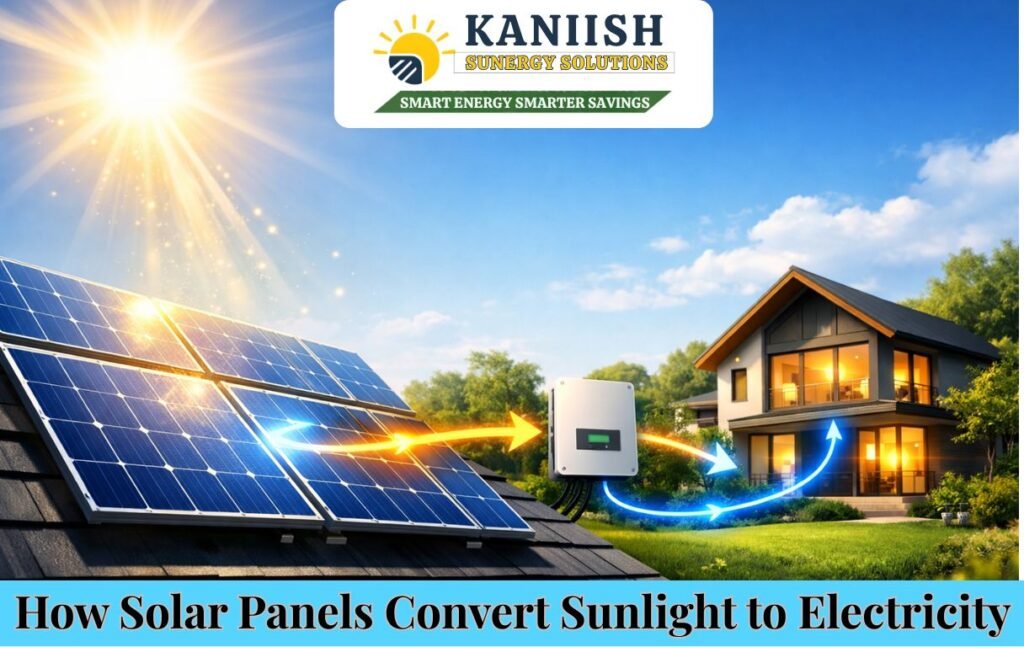
Introduction : Solar energy is one of the most powerful and sustainable renewable energy sources available today. As electricity prices continue to rise and environmental concerns grow, many homeowners and businesses are switching to solar power. However, many people still ask one important question How do solar panels convert sunlight into usable electricity? In this article, we will clearly explain every step of the process — from sunlight hitting a solar panel to electricity powering your home — in a simple and easy-to-understand format. What Is Solar Energy? : Solar energy comes directly from the sun in the form of light and heat. Every day, the sun releases an enormous amount of energy toward the Earth. Fortunately, modern solar technology allows us to capture and convert this sunlight into electricity. At the core of this process lies the photovoltaic (PV) effect, which enables solar panels to generate electrical power. Step 1: Sunlight Hits the Solar Panels : First, sunlight reaches the solar panels installed on your rooftop or property. Each solar panel contains multiple smaller units called solar cells. Manufacturers typically use silicon, a semiconductor material, to build these cells. When sunlight — made up of tiny energy particles called photons — strikes the surface of the solar panel, the photons transfer their energy to the silicon atoms inside the solar cells. As a result, the energy interaction begins the electricity generation process. Step 2: The Photovoltaic Effect Begins : Next, the photovoltaic effect takes place inside the solar cell. This process drives the entire solar energy system. Here’s exactly what happens: Consequently, the movement of electrons creates an electric current. In simple terms, when electrons move, electricity forms. Step 3: Solar Panels Generate Direct Current (DC) : As electrons flow through the solar cells, the system generates Direct Current (DC) electricity. However, most household appliances and electrical systems operate on Alternating Current (AC) electricity. Therefore, you cannot use DC electricity directly in your home. At this stage, the system requires an important component to convert the power. Step 4: The Inverter Converts DC to AC : At this point, the inverter plays a crucial role in the solar power system. In fact, many experts consider it the heart of the entire setup. The inverter performs two key functions: Once the inverter completes the conversion, the AC electricity flows into your home’s electrical panel. From there, your home distributes the electricity wherever needed. Step 5: Your Home Uses the Solar Power : Now, your home can actively use the solar-generated electricity to power: If your solar panels produce more electricity than your home consumes, the system handles the extra energy efficiently. For example: As a result, you maximize energy usage and reduce electricity costs. What Happens at Night or During Cloudy Days? : Naturally, solar panels cannot generate electricity at night because sunlight is not available. Similarly, energy production may decrease on cloudy days. However, you still have reliable power options: Therefore, you can enjoy continuous and uninterrupted power throughout the day and night. Essential Components of a Solar Power System : A complete solar power system includes several important components: Together, these components ensure smooth and efficient solar power generation. Benefits of Solar Energy : Today, more people choose solar energy because it offers numerous advantages. For instance: Moreover, solar panels contain no moving parts, which reduces wear and tear. Most systems last 25 years or longer, making them a long-term investment. Why Solar Energy Represents the Future : As global temperatures rise and fossil fuel prices continue to fluctuate, renewable energy solutions have become essential. Governments across the world now encourage solar installations through subsidies and incentives. Furthermore, technological advancements have improved solar panel efficiency while lowering installation costs. Consequently, solar power has become more affordable and accessible than ever before. For these reasons, solar energy no longer represents just an alternative option — it represents the future of clean, reliable electricity. Conclusion : Solar panels convert sunlight into electricity through the photovoltaic effect. When sunlight energizes electrons inside the solar cells, those electrons begin to move and generate electrical current. Then, the inverter converts that electricity into usable power for homes and businesses. By understanding how solar panels work, you can make a smart and sustainable energy decision. If you plan to switch to solar power, now is the perfect time to take action and invest in a cleaner future.

Cost Comparison of Grid Electricity vs Solar Energy
Uncategorized

Cost Comparison of Grid Electricity vs Solar Energy

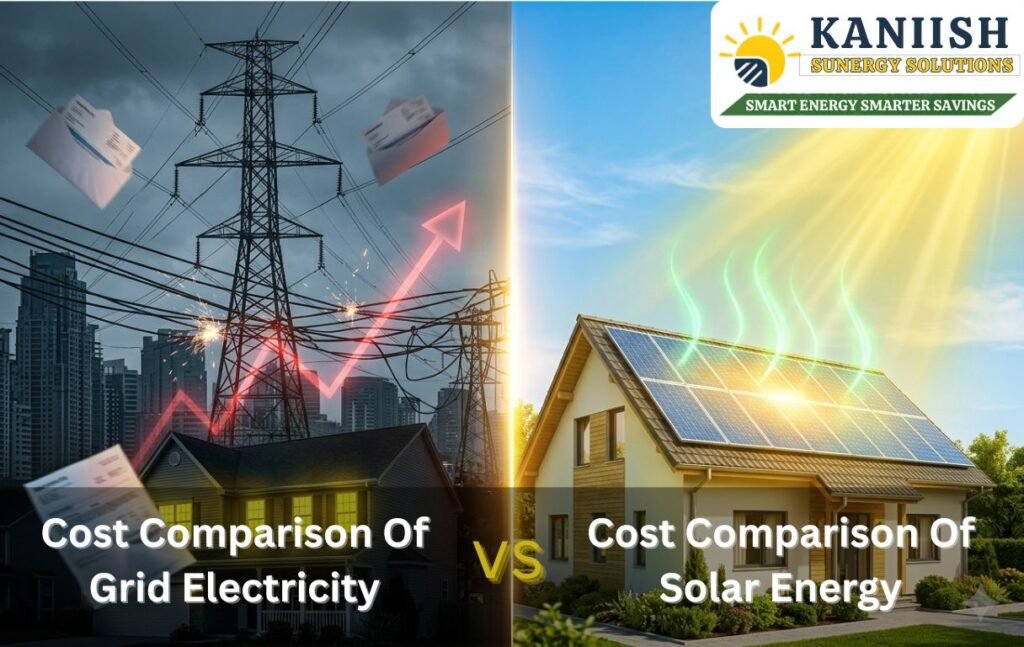
Introduction : In recent years, with the increase in electricity tariffs and growing environmental awareness, many homeowners and businesses are actively exploring renewable energy alternatives. As a result, numerous organizations and households are switching from grid electricity to solar energy solutions. Consequently, one of the most frequently asked questions in this solar vs. grid electricity comparison is: Is grid electricity more economical than solar in the long run? As India continues to expand its renewable energy infrastructure, with states like Tamil Nadu at the forefront of solar adoption, it is becoming increasingly important to understand the cost difference between solar power and traditional grid electricity. In this context, evaluating both short-term investment and long-term savings is essential for smart financial planning. Moreover, homeowners and businesses must compare installation costs, maintenance expenses, and electricity bill savings. Therefore, this blog provides an in-depth comparison — from upfront solar installation costs to long-term financial benefits — giving you all the information needed to make an informed and cost-effective energy decision. Understanding Grid Electricity Costs : To begin with, grid electricity is the power supplied by the local electricity board through existing transmission and distribution networks. However, despite its accessibility and convenience, the cost of grid electricity depends on several important factors. In fact, the electricity tariff structure is influenced by multiple variables, including fuel prices, government regulations, infrastructure costs, and demand patterns. Electricity Cost Breakdown by major Sources of Grid Electricity : Monthly Electricity Bills In India, electricity tariffs rise every few years. Commercial and industrial users typically are charged higher per-unit rates than residential users. Tariff Slabs The slab system is used in most states — the more you consume, the higher per-unit cost. Long-Term Price Increase Historically, inflation and fuel costs cause electricity rates to increase every year. Result: You never stop paying monthly bills for the rest of your life, and you own nothing in electricity generation. Understanding Solar Energy Costs : To begin with, the process of getting solar energy mainly involves setting up a solar power system — most commonly a rooftop solar system — that captures sunlight and converts it into electricity through high-efficiency solar panels. In simple terms, solar panels absorb sunlight and generate direct current (DC) power. Consequently, this renewable solar energy can be used to power homes and businesses while reducing electricity costs. Initial Investment The main expense involved with solar energy is the initial installation cost, covering: While their upfront cost is relatively high, government subsidies make for a much lighter load for household customers. Comparison of the Cost: Solar and Grid Electricity : 1 Initial Cost Grid Electricity: No Installation cost(charge connection only). Solar Energy: One-time installation investment. ✔ For short-term affordability → Grid wins. ✔ Solar monthly bills beat others in saving long-term. 2 Monthly Expenses Electricity from the grid: Monthly bills each month Solar Energy: Small or no electricity costs ¬ (depends both on system size and usage). ✔ Massively cuts monthly payments. 3 Long-Term Cost (25 Year Study) Solar systems, on the other hand, typically last 25 years or more. Over two-and-a-half decades, users of solar often save lakhs compared to grid-dependent users. 4 Maintenance Costs Importantly, the fact that solar panels do not have moving parts makes them highly durable and reliable. As a result, solar panel maintenance costs remain low compared to conventional power systems. Therefore, homeowners investing in a solar energy system benefit from minimal upkeep and long-term cost savings. 5 Power Reliability Solar provides more independence in places with lots of outages. Environmental Cost Comparison : Beyond money, there’s an environmental consideration: That means, less carbon footprint and saving some cash by switching to solar. When Grid Electricity Makes Sense : Grid electricity may still make sense if: When to Choose Solar Energy Instead : Solar is ideal if: Government Support in India : Moreover, the Central Government actively encourages rooftop solar under national renewable energy missions. In addition, incentives such as tax credits and net metering policies make solar energy systems more affordable and financially attractive for homeowners. As a result, rooftop solar adoption continues to grow across residential sectors. Final Verdict: Which Is Simplest on the Wallet? ✔ Short-term: Electricity from grid is cheaper. ✔ Over the long-term, solar energy is WAY more affordable. Though solar is an upfront capital investment, it provides: Conclusion : The bottom line is this: solar energy vs. grid electricity is really a question of long-term financial planning. On the one hand, solar turns electricity into a once-in-a-lifetime expense with decades of returns rather than continuous monthly payments that shopping for the best deal can only ameliorate. On the other hand, grid electricity is like your mortgage or rent — a recurring cost you continue to pay month after month. If you are looking ahead—for financial stability, sustainability and energy security—solar simply makes more sense. Make the switch today, save tomorrow and harness power from the sun.

What Is Rooftop Solar And How It Works
Uncategorized

What Is Rooftop Solar And How It Works

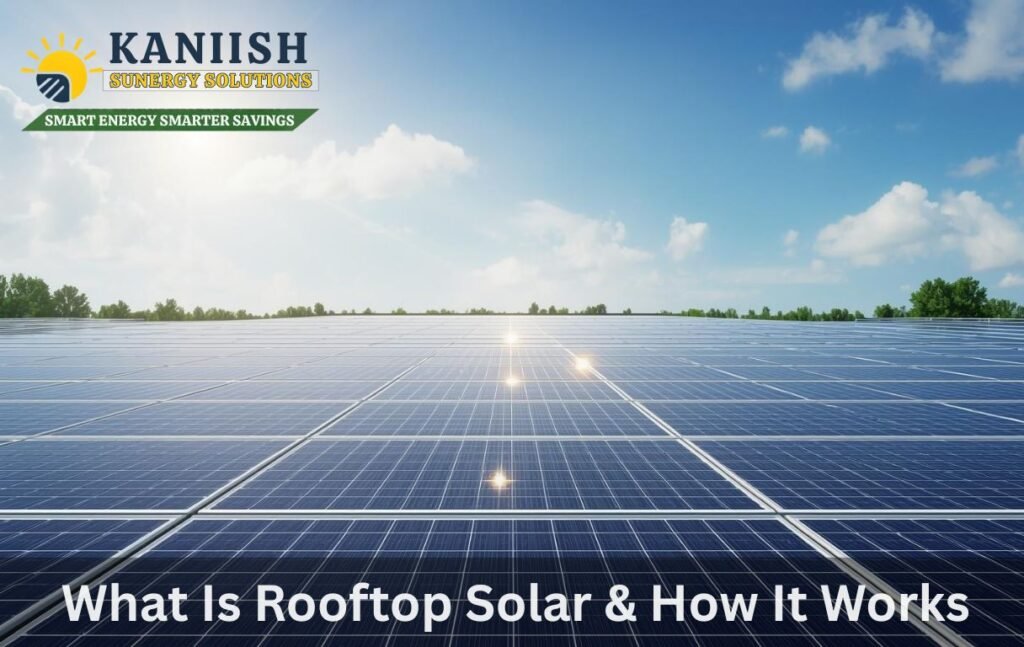
Introduction With electricity prices steadily increasing and environmental issues on the rise, homeowners and businesses a like are transforming their rooftops into smart, sustainable solar solutions. The best part about rooftop solar systems is that they allow you to generate your own electricity from free sunlight while reducing dependence on traditional power sources and lowering monthly energy bills. But what is rooftop solar, and how does it work? Let’s break it down into something simple and practical. What Is Rooftop Solar? Rooftop solar is a type of solar power system that installers place on the roof of residential or commercial buildings. It uses solar panels to capture sunlight and convert it into usable electricity for your property. A rooftop solar system lets you generate clean energy exactly where you use it instead of drawing all your power from the utility grid. This approach improves energy efficiency and supports eco-friendly living. There are three types of rooftop solar systems: a) On-grid (Grid-tied) system – Connects directly to the electricity grid.b) Off-grid system – Operates independently and includes battery storage.c) Hybrid system – Connects to the grid and includes battery backup. Key Elements of a Rooftop Solar System You don’t need technical expertise to understand rooftop solar, but knowing the basics helps. 1. Solar Panels Installers mount solar panels on the roof, positioning them to capture maximum sunlight. The panels contain photovoltaic (PV) cells that convert sunlight into direct current (DC) electricity. 2. Solar Inverter Homes and businesses use alternating current (AC) electricity to power appliances. The inverter converts the DC electricity generated by the solar panels into usable AC electricity. 3. Mounting Structure The mounting structure secures the panels firmly to your roof at the correct angle to maximize sunlight exposure. 4. Net Meter (For On-Grid Systems) The net meter tracks the electricity you send to and draw from the grid. If you generate more power than you consume, the system sends the excess electricity to the grid, and you receive credits. 5. Battery (Optional) Hybrid and off-grid systems store excess electricity in batteries for nighttime use or during power outages. How Rooftop Solar Works — Step by Step Here’s how the system works: Step 1: Sunlight Hits the Solar Panels During the day, solar panels absorb sunlight. Step 2: DC Electricity Generation The photovoltaic cells convert sunlight into direct current (DC) electricity. Step 3: Conversion into AC Electricity The inverter converts DC electricity into alternating current (AC), which powers your home or business. Step 4: Powering Your Property The AC electricity flows to your main distribution board and powers lights, fans, air conditioners, and other electrical devices. Step 5: Managing Excess Power In an on-grid system, the system sends excess electricity back to the grid.In a hybrid system, the system stores extra electricity in batteries.At night, your home draws power from either the grid or the battery system. Benefits of Rooftop Solar1. Reduced Electricity Bills When you generate your own power, you significantly reduce your monthly electricity expenses. 2. Environmentally Friendly Solar energy provides clean, renewable power and reduces carbon emissions. 3. Energy Independence Generating your own electricity reduces your dependence on the grid and protects you from rising tariffs. 4. Low Maintenance Most solar systems require minimal maintenance and operate efficiently for 20–25 years or more. 5. Increased Property Value Homes with installed solar systems often attract more buyers and achieve higher property value. Who Should Consider Rooftop Solar?Rooftop solar works best if: A professional site assessment can help determine the right system size and configuration for your needs. Conclusion Rooftop solar offers an affordable, reliable, and eco-friendly way to generate electricity directly from your rooftop. By converting sunlight into usable power, you reduce energy costs, lower your carbon footprint, and support sustainable living. With advancing technology and government incentives, rooftop solar has become more than just an alternative — it is a smart investment for the future. Both homeowners and businesses can use rooftop solar panels to save money while contributing to a cleaner planet.

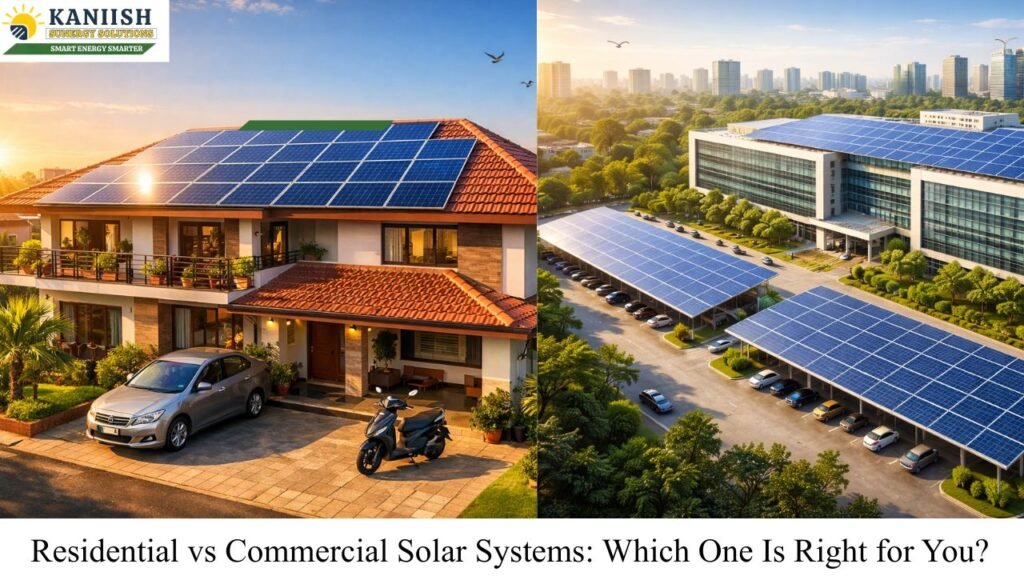
Residential vs commercial solar systems comparison showing Indian house rooftop solar panels and commercial office solar installation.
Uncategorized

Residential vs Commercial Solar Systems: Which One Is Right for You?

Introduction There has never been a better time to be an advocate for solar power and sustainable living as solar is being installed more quickly than ever before as the cost of electricity continues to increase and thought is now given to our environment. Today, homeowners and businesses alike are increasingly turning to solar power as a way to lower costs over the long term while decreasing their carbon footprint. But the distinction between home solar and business solar often goes uncomprehended. Both of these systems derive energy from the sun and provide clean electrical power, but they are different systems designed to address different needs. So, you have to learn the difference before investing. What Is a Residential Solar Power System? A home solar power system is custom designed for the needs of a household and small living accommodations. These systems are normally mounted on the rooftop and have power output according to the electricity use in a house. For the first, capacity of residential systems is generally less. A system of between 1 kW and 10 KW on average is installed for a home. Since homes use less energy than a business, fewer panels are needed. Plus, it’s usually faster and easier to install. Generally, the rooftop area is evaluated and solar panels are installed in a couple of days. The system is then attached to the grid or battery backup. Government subsidies to home owners are also common. To save that initial investment heap which can be quite substantial. Key highlights of residential solar Lower installation cost Faster setup time Government subsidies available Designed for household energy usage What is Commercial Solar System? Commercial solar systems, on the other hand, are designed for businesses, factories, offices and larger facilities. Commercial operations use more electricity, so they need larger systems. Commercial systems are typically sized between 10 kW and multiple megawatts. Panel placement is commonly performed on vast roof-tops, empty land or industrial sheds. What is more, commercial systems are investment decisions which last for years to come. Electricity is much cheaper, and operating costs are more manageable. The savings accumulate over time. Moreover, the businesses are generally provided tax incentives and accelerated depreciation. Thus, the payback time would be shorter. Key highlights of commercial solar: Large-scale energy production Higher upfront investment Faster ROI through energy savings Perfect for warehouse, office and school Key Differences Between Residential and Commercial Solar Even though both of them produce solar energy, there are many key aspects to take into account. System Size and Capacity: Systems are smaller at homes because so much less electricity is used. Commercial systems on the other hand are larger and built for heavy energy consumption. Installation Complexity: Domestic installations are usually done fast. But commercial projects are big business, and they’re not just installed willy-nilly. Return on Investment: For a homeowner, “You have to gradually chip away at it,” saving through time. Meantime, businesses tend to receive faster financial payback due to much higher electricity consumption. Cost Structure: Initial budgets for residential systems are less expensive. On the other hand, a high cost and investment are required for commercial systems whereas higher returns can be expected in the longer term. Which System Should You Choose? The correct answer is totally dependent on what you need for power and monetary prospects. For a homeowner who is tired of high electricity bills and desire independence from the grid, residential solar system will be a perfect fit. You can lower your energy bills each month while increasing the value of your home. But if you operate a business or handle the operations at a high-power facility, then commercial solar calculator should be on the table for consideration. Significant energy saving can be realized and operation cost can be reduced. Ultimately the decision should be based on energy consumption and longer term expansion plans. Conclusion To sum it up, residential and commercial solar systems are both incredibly beneficial, but they meet different needs. The residential units (-2 sinks) have been designed to offer a practical and sustainable energy-productive equipment for home use. On the other hand, Commercial systems are developed for corporations interested in cutting costs and enhance future profits. So the best option depends on how much electricity you use, your budget, and long-term plans. Transitioning to solar means generating clean energy that will save you money — and giving your children a cleaner, more sustainable future.

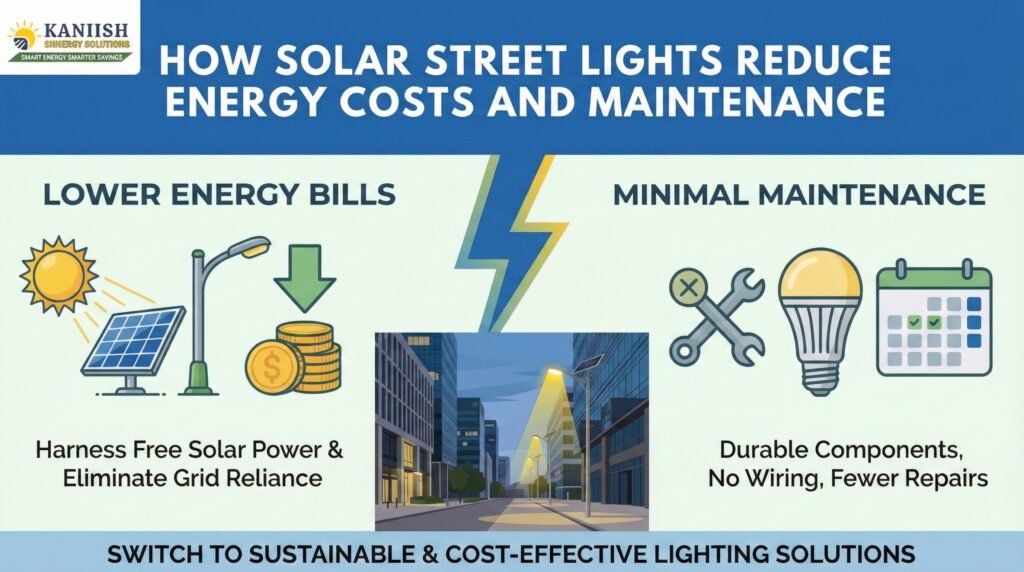
Solar street lights reducing energy costs and maintenance with icons showing solar panel, LED lamp, savings and maintenance tools
Uncategorized

How Solar Street Lights Reduce Energy Costs And Maintenance

 Introduction In cities, along highways and campuses and in industrial areas, outdoor lighting is a necessity to promote safety and efficiency. However, conventional street lighting systems consume a large amount of electricity and need maintenance frequently. With prices of energy on the increase, smarter lighting alternatives are being sought. The solar powered street light would become increasingly popular due to significantly reduced maintenance cost. Lighting technology powered by solar power has been developed in the last few years. As a result, solar street lights are springing up in urban streets, rural roads, villages,vacation spots,parking lots and in various locations where lighting is required. It not only decreases energy consumed, but also decreases operational costs. So it’s no wonder why solar lighting is seen as a personal and economic investment! Electricity Costs Are Completely Eliminated Among the firm’s biggest financial benefits would be that electricity bills would disappear altogether. Conventional street lights need to be linked into an electrical grid, and significant electricity costs are accumulated. Solar street lights are run by solar panels. During the day, when it is catching sunlight, that light is absorbed and converted to electricity. The energy is kept in batteries and drawn on overnight. This means no grid electricity is needed. Key Points: Monthly electricity bills are eliminated. Increase in energy tax does not lead to higher overall costs of operation. The lights still work when power is down. Long-term energy savings are guaranteed. And as free solar energy is used, the sooner your conversion cost is recouped. Installation Costs Are Reduced Conventional street lights involve many difficult challenges such as laying cable, digging holes and routing power to a pole where they are already connected with the solar panel and the led. These infrastructure projects have high costs and long construction times. Solar street lights on the other hand, are independent systems. The under-ground wiring need not be installed, so installation is quicker and more efficient. In addition, the labour cost is greatly reduced. Key Points: No underground cables are needed. Electrical trenching expenses are avoided. Installation time is shortened. It’s easy to light up the remote places. As a result, project budgets are at their best from the start. Maintenance Requirements Are Minimal Of course, the traditional lighting requirements are more likely to require inspection and maintenance on a periodic basis. Bulbs blow, wires fail and electrical problems happen all the time. As a result of this, maintenance budgets are all but chewed up. Solar street light adopts many outdoor lighting systems such as LED lamps and Lithium batteries. The working time of these elements is very long. Thus, maintenance requirements are significantly reduced. Key Points: LEDs can be cycled 50,000 hours or longer. Battery replacement cycles are extended. Fewer electrical failures occur. Routine servicing is simplified. In the long term, maintenance charges are also significantly lower. Smart Automation Reduces Energy Waste Intelligent control facilities are installed in present-day solar street lamps. Brightness automatically adjusting by motion detection and time schedules. This is, while power consumption is minimized, battery efficiency is enhanced. For instance, lights may have low light levels when the amount of traffic is low. Full brightness when motion is detected. In exhibited energy storage is not wasted. Key Points: Motion sensors prevent unnecessary lighting. Automatic dimming saves battery power. Smart controllers extend battery life. Energy efficiency is maximized. So overall efficiency is further boosted. Long Lifespan Ensures Higher ROI Solar Street Light, built for Outdoor Applications. Weather resistant material for long-lasting use. Given the low levels of corrosion and wear, system life is increased. While the cost of entry may be on the high side, you’ll save a lot of money in the long run. For years to come, running cost are next to nothing. Key Points: Systems last for 10–15 years or longer. Replacement expenses are reduced. ROI is fast. Sustainable infrastructure value is increased. This is where solar lighting is turning out to be the smart choice. Environmental Benefits Reduce Hidden Costs Fossil fuels, of course, produce carbon emissions and environmental devastation. All in all, solar street light is a dependable and good solution for lighting the streets at night! 5. Hillary say Solar-powered street lights are based on eco-friendly system. Consequently, impact on the environment is reduced. Sustainability is coming under ever greater focus in government and the corporate sector. Green solutions are encouraged, so solar lighting helps you to comply with regulation and corporate responsibility targets. Key Points: Carbon emissions are reduced. Sustainable infrastructure is supported. Environmental compliance is improved. Green branding value is enhanced. In this way, both economic and environmental benefits are obtained. Conclusion Solar street lighting has changed the way people light up their outdoors by eliminating different electricity costs, simplifying and reducing maintenance, and improving efficiency. Operating costs are incrementally reduced because solar power is freely available. “Sending in a contactor is just simpler and quicker, automation speeds everything up and the long life means your return way exceeds anything you can get from better sealants. Solar street lights are now regarded as stepping stones to build smart and more sustainable cities. Cities and industry are increasingly embracing that technology to lower costs and increase reliability. In the end, solar lighting is not only a viable cost-effective alternative to traditional outdoor lightinh – it IS the future of economical outdoor illumination.

Scroll to Top