
Introduction
If you’re considering setting up solar power for your home or business, then the phrase “net metering” has probably come up. Net metering is one of the most significant factors that make solar power financially attractive for a large number of Indian consumers.
Put simply, net metering permits you to export surplus solar power to the grid and receive credit for it. This in turn lowers your electricity bill and increases the return on your solar investment.
We tell you what net metering is and how it works & why it’s such a big deal for solar users in India, by using plain language and real-world examples, on this blog post.
What Is Net Metering?
Net metering is a billing mechanism that allows for both:
- Power you borrow from the grid
- The electricity you export to the grid from your solar panels
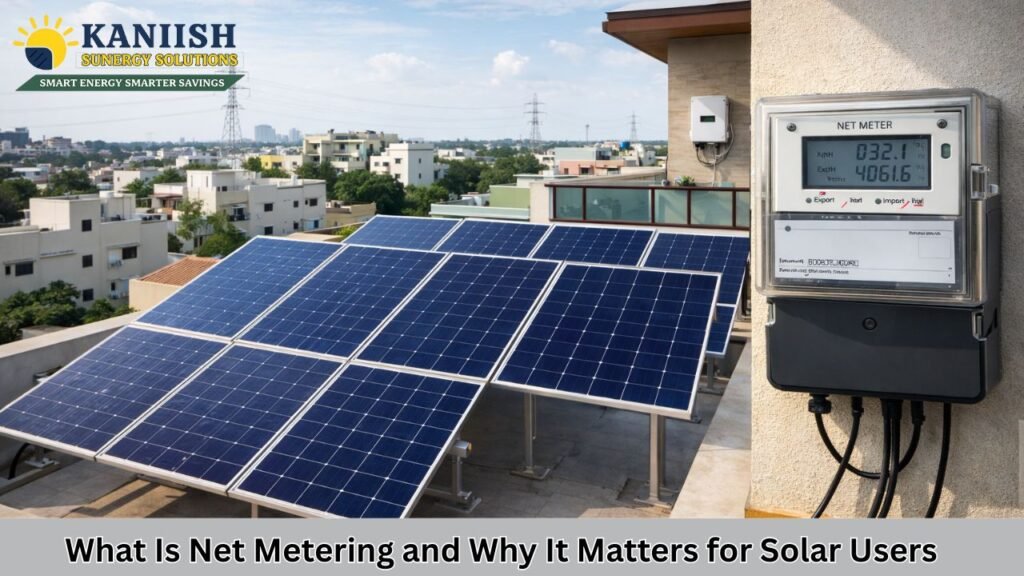
A proprietary back and forth meter is installed at your location. The Net meter registers the difference (net) between imported and exported units of electricity.
When your solar system generates more electricity than your house consumes, that excess energy is sent back to the grid and credited to you.
How Net Metering Functions in a Solar Power System
Net metering is simple to understand when it’s deconstructed step by step.
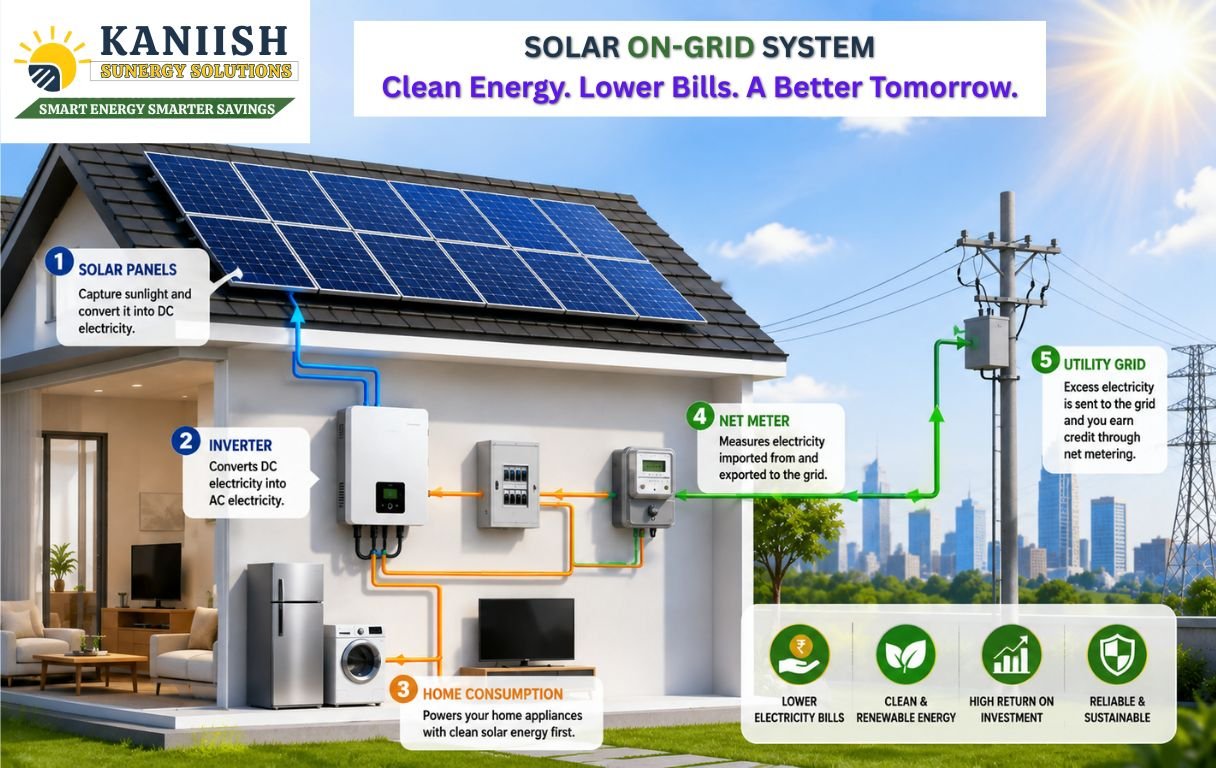
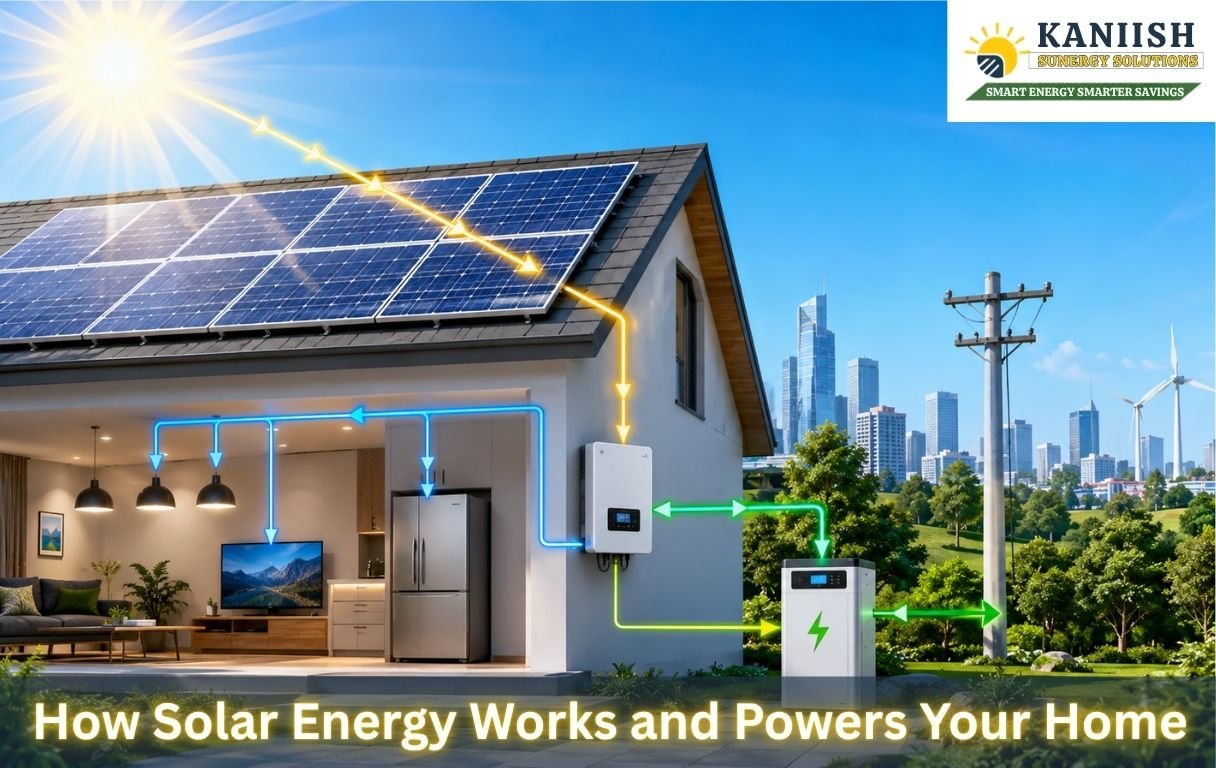
Step 1: Power from the Sun is Collected by Solar Panels
While the sun shines, the suns rays are used by solar panels to generate electricity.
Step 2: Use solar power to fuel home first
The home appliances are using solar energy straight as it is produced.
Step 3: Extra Power Is Pushed to the Grid
If you produce more solar energy than you use, the surplus electricity is sent to the electric grid.
Step 4: Record Units by Net Meter that Make-up the Total Demand:
The net meter records:
- Units exported to the grid
- Units imported from the grid
Step 5: Adjustment of the Electricity Bill
At the end of your billing cycle, exported units are balanced against imported units and you electricity bill is settled accordingly.
Why Solar Users Care About Net Metering
Net metering is important for maximizing the savings from solar.
Reduces Electricity Bills Significantly
With net metering, no solar power goes to waste. Even if you are out during the day, spare electricity is still exported and credited.
Improves Return on Investment (ROI)
When there is no net metering, you forfeit excess solar electricity. Through net metering, you can take stock of every unit generated to make sure that both small and large users recover their investments on solar faster.
Encourages Daytime Solar Generation
Those installations that have good solar siting gain the most, as more generation results in more export credits.
Makes On-Grid Solar Systems Practical
Net metering makes up the foundation of on-grid solar systems, and this is more economical solution for city homes.
Example of Net Metering Savings
We will get to the understanding with a simple example:
- Monthly solar generation: 400 units
- Monthly home consumption: 300 units
- Excess fed to grid: 100 units
If your electricity cost is ₹7/unit:
- 100 units × ₹7 = ₹700 credit
The utility applies this credit to your bill, reducing the amount you need to pay.
Over a year, they could save thousands of rupees.
Net Metering vs Normal Electricity Meter
| Feature | Normal Meter | Net Meter |
|---|---|---|
| Measures import | Yes | Yes |
| Measures export | No | Yes |
| Solar bill benefit | Limited | Maximum |
| Best for solar | ❌ | ✅ |
Who is Eligible to Use Net Metering in India?
Net metering is commonly used with:
- Residential homes
- Apartments (with approvals)
- Commercial buildings
- Small industries
Availability and rules depend on:
- State electricity board
- Local DISCOM regulations
Net metering is available in most Indian states for rooftop solar installations.
Is Net Metering Available in all Over India?
These numbers depend on the state, which has specific net metering policies, but:
- Residents in most states can net meter their solar
- System size limits may apply
- Approval process differs by DISCOM
That’s the stuff a good solar company does:
- Net meter application
- Documentation
- Coordination with electricity board
Will Net Metering Function in a Power Outage?
And here is a safety tip.
- And then there are on-grid systems where people don’t have access to solar during power cuts
- This prohibits the flow of electricity back into the grid, which could injure line workers
- Net metering starts working again as soon as power is restored.
If you need back up power during outages a battery hybrid system is the best option.
Net Metering and Solar Size
To maximize net metering benefits:
- You’d want a solar system that’s the same size of your typical monthly electricity consumption
- Oversizing could mean wasted reductions
- Undersizing may reduce savings
A good site analysis will help size an appropriate system.
Common Myths About Net Metering
Net metering gives cash payments
No. The system applies these credits to future electricity bills instead of paying them out as cash.
Net metering is complicated.
For users, it just happens automatically after they install it.
Net metering is not reliable
Once approved, it runs according to DISCOM regulations.
Benefits of Net Metering To For Indian Homes
- Lower electricity bills
- Faster payback period
- Maximum utilization of solar power
- Long-term financial savings
- Encourages clean energy usage
Is Net Metering Worth It?
Net metering, however, is definitely worth it for most solar users in India. It turns solar panels into more than just a power source, but also into a savvy financial asset.
If you have a well-situated, sunny home and some daytime solar generation capacity, net metering can certainly maximize your solar savings.
Conclusion
One of the critical attributes of grid-tied solar is net metering. It helps you get full value for all the solar electricity you produce.
Through selling surplus electricity to the grid and earning credits, users are able to save on their power bills significantly and better manage long-term savings. Net metering is an important concept for anyone considering rooftop solar.
Frequently Asked Questions (FAQs)
Yes. Net metering reduces your electricity bill by adjusting the excess solar power you export to the grid against the power you consume later. This ensures you pay only for the net units used.
When your system generates surplus electricity, it automatically exports the extra units to the grid. These units are credited and adjusted against your future electricity bills.
No. Net metering works automatically once approved and installed. You do not need to track exports or imports manually—the net meter handles everything.
In on-grid solar systems, net metering does not function during power cuts for safety reasons. Once grid power is restored, net metering resumes automatically.
Net metering is suitable for most residential and commercial solar users, subject to state DISCOM rules and system size limits. A solar installer can confirm eligibility and handle approvals.