Introduction :
With electric pricing growing more costly than ever it is easy to look for methods to do away with those fees and by pass outside sources utilizing solar options. In fact, the most popular system that you can adopt for your household and which will provide an effective solution to this problem is a Solar On-Grid System in India as it connects solar panels directly to the utility grid. This enables users to create clean energy during the day while having access to grid electricity at all times. As a result, users may drive down their electricity expenses and play a part in the environment.
What is a Grid Installation with Solar?
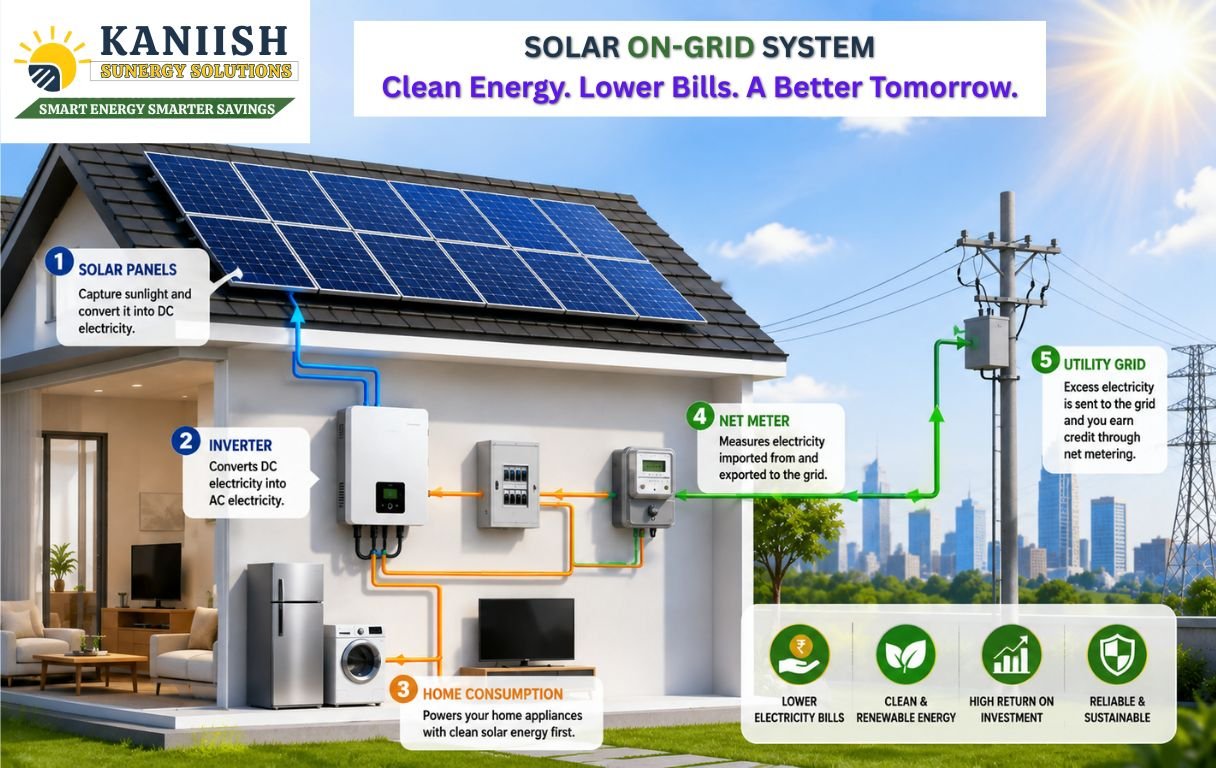
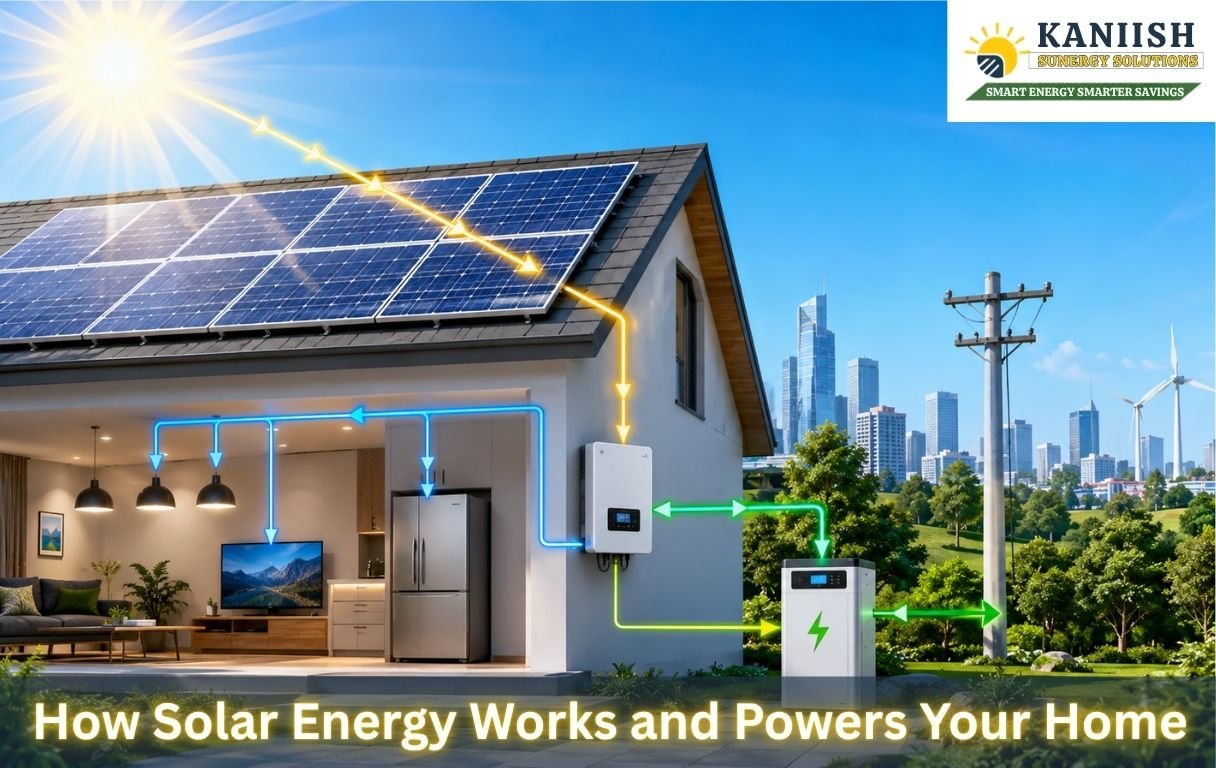
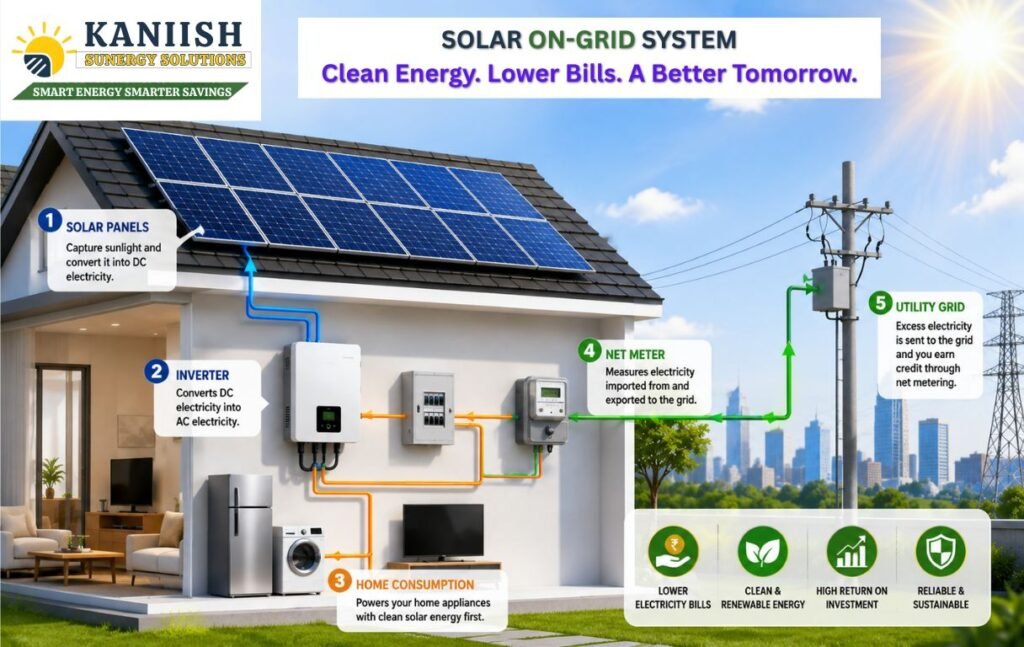
Grid connect solar systems (or On-Grid Systems) Solar Power. This system leverages the power of solar panels to produce electricity from sunlight. The generated direct current (DC) is then sent to an inverter, which transforms DC into alternating current (AC), that runs electrical appliances and equipment.
If the system produces more energy than what the property uses, that additional electricity will flow back to the utility grid. In exchange, the utility provider might give credits through a net metering program.
How does a Solar On-Grid System work?
Solar panels absorb sunlight and convert it into DC electricity.
1. The role of the inverter is to convert DC current into AC electricity.
2. You only use the electricity when you produce it.
3. The excess electricity flows to the utility grid.
4. Whenever there is a reduction in solar generation, the grid provides electricity.
5. As a result, the users have round-the-clock power supply.
Therefore, users enjoy a continuous power supply throughout the day and night.
Key Components of a Solar On-Grid System :
Solar Panels
Solar panels are going to be that main source of energy generation. Their efficient, sun-awakening chips convert sunlight into electricity.
Solar Inverter
The inverter basically converts DC to AC power. This also synchronizes the system to the utility grid.
Net Meter
It measures both the electricity imported and exported, unlike a regular meter. As a result, users are compensated for the surplus energy exported to the grid.
Mounting Structure
The mounting structure supports the solar panels and positions them to receive ample sunlight.
Safety Equipment
Circuit breakers, isolators and surge protection devices enhance system safety as well as protect electrical components.
The Advantages of a Solar On-grid System :
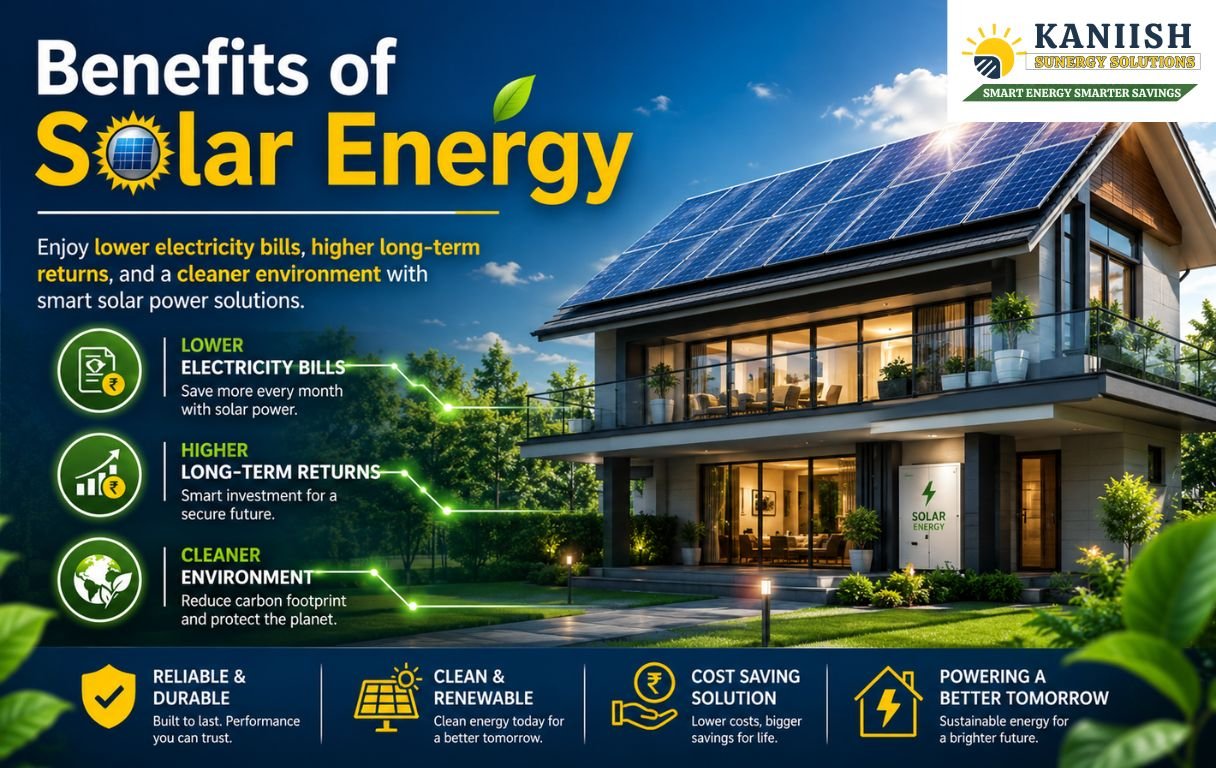
Lower Electricity Bills
This system converts sunlight into electricity that can greatly bring down monthly utility bills.
Environmentally Friendly
Solar energy does not emit pollutants into the atmosphere during operation. Therefore, it helps the users to put their carbon footprint on a lower side and contribute towards environmental sustainability.
High Return on Investment
Installation does require an initial premium, but users will recoup through long-term energy savings.
Low Maintenance Requirements
Solar systems require minimal maintenance. Regular cleaning and periodic inspections ensure the system operates efficiently.
Efficient Use of Excess Power
Rather than dumping excess power, the system exports renewable energy into the grid while keeping more energy in circulation.
Applications of Solar On-Grid Systems :
The Solar On-Grid Systems are permissible for :
a) Residential homes
b) Commercial buildings
c) Educational institutions
d) Hospitals
e) Industrial facilities
f) Government offices
With rising consumption of energy, such photovoltaic technology is adopted by many industries as it helps improve overall operational efficiency and lowers operating cost.
Factors to Consider Before Installation :
Must Evaluate Several Essential Elements Before Installing an Solar On-Grid System
Roof Space
Sufficient space on the roof ensures proper panel installation and maximum power output from them.
Sunlight Availability
For instance, properties with consistent sunlight exposure demonstrate higher performance and greater energy output.
Electricity Consumption
Without a thorough understanding of current energy usage, it is impossible to know the right the size for an efficient system.
Local Regulations
Users are advised to check local utility policies, net metering regulations and installation protocols beforehand.
Quality of Components
In addition, high-efficiency panels and inverters add to the overall reliability and longevity of your system.
Why Choose a Solar On-Grid System?
Solar On-Grid Systems – Cost-effective and Sustainable Energy Solution For many property owners Additionally, the system decreases reliance on traditional power sources and allows for steady energy savings. As solar technology has improved, this process has also become more accessible and cheaper than ever.
Conclusion :
The Solar On-Grid System is designed to optimally generate clean power while lowering electricity costs. With direct connection to the utility grid, it guarantees a reliable power supply and capitalizes on every bit of generated solar energy. Additionally, it is environmentally sustainable and provides wealth over generations. With the increasing demand for renewable energy now makes investing in a Solar On-Grid System an intelligent and futuristic approach normal homes are turning into businesses.